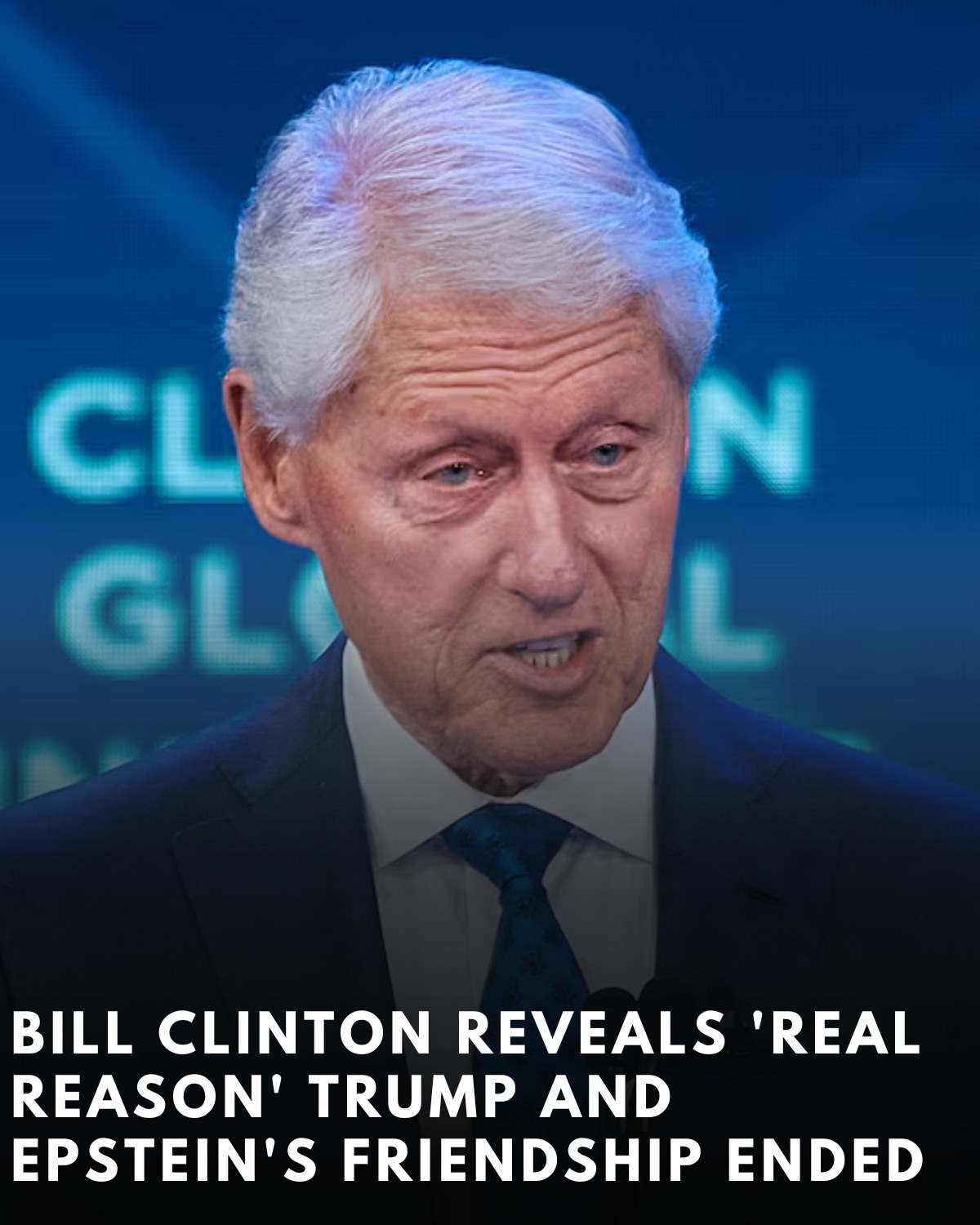
Former US President Bill Clinton has told congressional investigators that Donald Trump once described his falling-out with Jeffrey Epstein as being driven by a dispute over a Palm Beach real estate deal, according to an account of Clinton’s closed-door deposition released in recent days.
Clinton was interviewed as part of the US House Oversight Committee’s investigation into Epstein’s network and associates. In that testimony, Clinton recounted an encounter in which Trump asked him about Epstein and referenced the relationship between the two men, according to the UNILAD report on the deposition.
In the same deposition account, Clinton said Trump told him: “You know, we had some great times together over the years, but we fell out, all because of a real estate deal.” Clinton added that Trump’s description was that, “I can’t remember the name of the house, but it was a huge house, right on the ocean in Palm Beach,” and that “Epstein got it, Trump wanted it, and he got fed up, and that is what ended their relationship,” according to the report.
The real estate dispute described in the deposition aligns with long-public reporting about a bankruptcy auction in 2004 for a large oceanfront estate in Palm Beach known as Maison de l’Amitie. The property, a six-acre lot with significant shoreline, went to Trump after he outbid other potential buyers, with accounts over the years identifying Epstein as a rival bidder. Public records and reporting have described Trump paying $41.35 million at the auction.
A contemporary outline of the property’s history notes that the estate went to auction after its then-owner filed for bankruptcy, and that Trump bought it in November 2004, later selling it in 2008 for $95 million to Russian billionaire Dmitry Rybolovlev. The same history says the bidding rivalry has been linked in reporting to the end of the Trump-Epstein relationship, while also noting Trump later said he banned Epstein from Mar-a-Lago and called him a “creep.”
Clinton’s deposition took place over several hours and has become a political flashpoint in Washington, with lawmakers disputing what the testimony means for broader questions about Epstein’s social circle and the scrutiny around Trump’s past association with the financier. The Independent reported that Clinton told investigators he “did nothing wrong,” that he saw nothing suspicious, and that he severed ties with Epstein before Epstein’s 2008 guilty plea, while also rejecting accusations that he knew of Epstein’s crimes at the time.
Epstein, a wealthy financier with connections across politics and business, died in a New York jail in 2019 while awaiting trial on federal sex trafficking charges. He had previously pleaded guilty in Florida in 2008 to state charges involving the procurement of a minor for prostitution, serving a jail sentence and registering as a sex offender. Federal prosecutors later described his conduct as an operation involving the sexual abuse and exploitation of underage girls over many years, allegations that have continued to generate litigation and document releases, as well as renewed debate over accountability for those around him.
Clinton has long faced scrutiny over his contacts with Epstein, including travel and meetings in the early 2000s that Clinton has said were tied to philanthropy and international projects. In the deposition account described by UNILAD, Clinton said he had stopped associating with Epstein before the 2008 guilty plea, and described his own understanding of Epstein’s later death in custody. “I don’t know what I believe. I mean, I think, obviously, he committed suicide but I don’t know if he would have done it if he hadn’t felt like he was going to be murdered anyway,” Clinton said, according to the report.
Trump has also faced sustained questions about his social interactions with Epstein dating back to the 1990s and early 2000s, including photographs and video footage that have circulated publicly for years. Reporting has also documented that Trump once spoke favourably of Epstein in an early-2000s interview, describing him as a “terrific guy” and “a lot of fun to be with,” comments that have been repeatedly cited as evidence the two men moved in similar circles before their relationship ended.
Trump has said in various public statements over the years that he ended his relationship with Epstein well before Epstein’s 2008 conviction, and has portrayed the split as a decision to distance himself from a person he viewed negatively. The deposition account attributed to Clinton adds a specific framing, suggesting Trump depicted the rupture as stemming from a property dispute in Palm Beach rather than concerns about Epstein’s conduct.
The Palm Beach property at the centre of the alleged dispute became one of Trump’s best-known real estate flips. Accounts of the auction and the subsequent sale describe the estate as a vast waterfront compound that later set a record price when Trump sold it in 2008, during a period of significant volatility in US property markets. The property was eventually demolished and subdivided, with parcels later selling in separate transactions.
Clinton’s deposition also touched on questions about Epstein’s social reach and the way people in elite circles described him at the time, according to the UNILAD report. In recounting Trump’s remarks, Clinton presented the former president’s description as an explanation Trump offered for why he no longer dealt with Epstein, placing the cause of the break in 2004.
The House Oversight Committee inquiry has sought testimony from multiple witnesses and has been driven in part by ongoing public pressure to release more records connected to Epstein’s associates and contacts. While details of closed-door testimony are typically restricted, summaries and excerpts have emerged through reporting, including claims about Clinton’s denial of wrongdoing and his insistence that he cut ties before Epstein’s 2008 plea.
The renewed focus on Trump and Epstein’s relationship has also been shaped by longstanding reporting that their social overlap ended around the time of the Palm Beach auction. A Washington Post account from 2019 described Trump and Epstein as sharing social spaces and travelling in similar circles, before becoming rivals over the oceanfront property in 2004.
Clinton’s testimony, as described in the published accounts, does not resolve broader questions that have surrounded Epstein’s network for years, including how much influential people knew about his conduct and when. It does, however, place a former president on the record describing a specific explanation Trump allegedly provided for the end of his friendship with Epstein, one centred on money and prestige in Palm Beach real estate.
The Oversight Committee’s investigation is continuing, with lawmakers signalling that additional witnesses may be called and further records sought as Congress faces renewed demands for transparency over the Epstein case.