A high-profile arrest executed in the final hours of 2025 has reignited a visceral national debate over the friction between federal immigration enforcement, local sanctuary mandates, and the precarious balance of public safety.
On December 31, Mahad Abdulkadir Yusuf, a Somali national with a criminal history, was taken into federal custody as part of a targeted operation by U.S. Immigration and Customs Enforcement (ICE).
While the arrest was framed as a routine enforcement action, the reverberations have transcended the individual case, turning it into a flashpoint in the ongoing national conversation about immigration enforcement, public safety, and the limits of local cooperation with federal authorities.
The Profile of a “Dangerous Criminal”
Federal officials have characterized Yusuf as a “dangerous criminal,” citing a history that spans more than three decades in the United States. Yusuf entered the country in 1996, eventually attaining lawful permanent resident status.
Over the years, his criminal record grew extensive and varied, with authorities highlighting both violent and sexual offenses. The centerpiece of the federal case for deportation is Yusuf’s 2016 conviction for first-degree criminal sexual conduct, involving repeated forced sexual acts on a victim.
ICE also references a 2016 first-degree assault arrest and an outstanding 2024 warrant for obstructing police officers, portraying him as a persistent threat to the Minneapolis community.
In statements to the media, ICE officials underscored the severity of the case, emphasizing that his continued residence in Minneapolis was a preventable public safety risk—a risk they claim was worsened by local policies restricting federal enforcement.
Sanctuary Policies in the Spotlight
ICE has publicly connected Yusuf’s prolonged freedom to Minnesota’s sanctuary-style policies, particularly restrictions on honoring detainers and limitations on information sharing between local law enforcement and federal authorities.
According to ICE, these policies have effectively created “blind spots” that allow individuals with criminal records to evade federal oversight.
Federal officials also alleged that past attempts to apprehend Yusuf were physically obstructed by third parties. One notable instance involved the manager of a Lake Street apartment building reportedly denying federal agents access to the premises during a prior arrest attempt.
The incident has been cited by DHS leadership as evidence of the challenges agents face when local policy and resident actions interfere with federal law enforcement objectives.
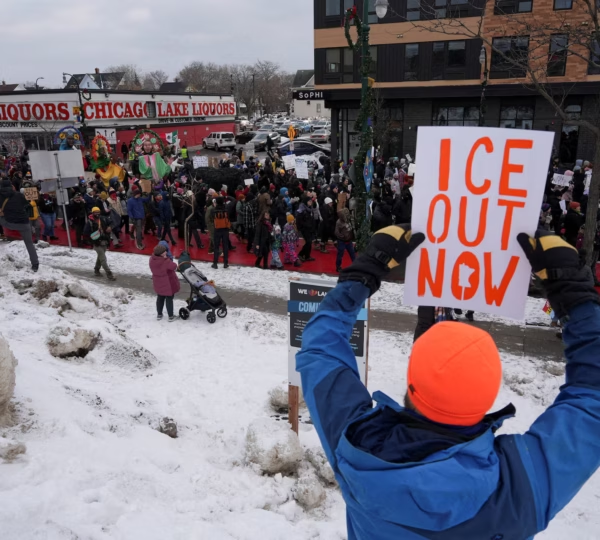
Federal officials have amplified their concerns on social media and public platforms, framing local resistance as not only a bureaucratic hurdle but also an encouragement to residents to intervene directly against federal operations, creating volatile situations that can escalate quickly.
Local Officials Push Back
Minnesota’s political leadership has been quick to challenge the federal narrative. Governor Tim Walz and Minneapolis Mayor Jacob Frey have defended the state’s sanctuary approach, asserting that decoupling local law enforcement from federal immigration operations is essential for maintaining trust within immigrant communities.
Their argument hinges on the principle that public safety is better served when immigrant residents feel secure reporting crimes and cooperating with police without fear that such interactions could trigger deportation.
By separating local policing from immigration enforcement, officials argue, communities become safer overall because individuals are more likely to come forward when they or their neighbors are victims or witnesses of crime.
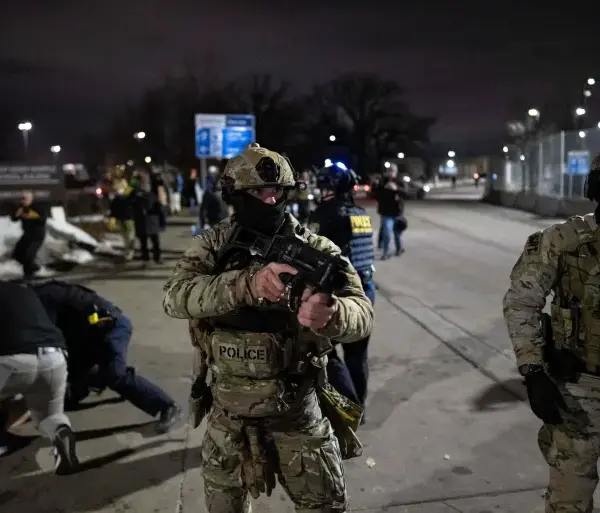
Mayor Frey has been particularly vocal in criticizing federal methods, arguing that the presence of heavily armed ICE teams in residential neighborhoods and public spaces has created unnecessary tension and fear.
He has described these operations as “overly aggressive,” asserting that they disrupt daily life and undermine trust between communities and law enforcement.
Operation Metro Surge: Broader Federal Efforts
Yusuf’s arrest was part of a larger federal escalation in Minnesota known colloquially as “Operation Metro Surge.” The operation aimed to locate and apprehend individuals with outstanding deportation orders, immigration violations, or violent criminal records.
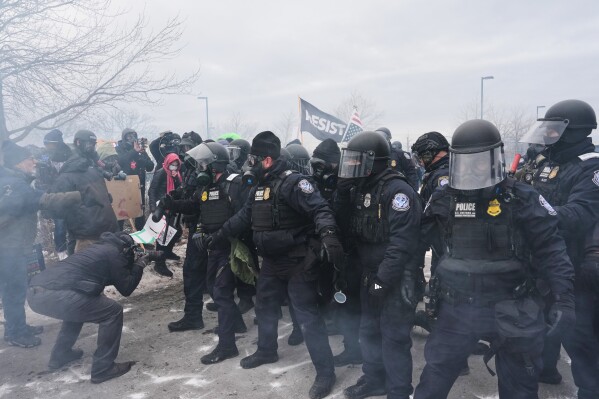
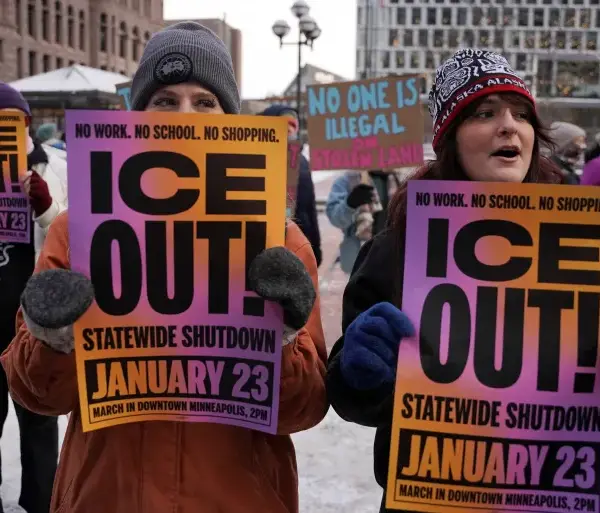
While federal officials cite the initiative as a necessary effort to enhance public safety, the impact has been felt most acutely within Minneapolis’ Somali-American community, the largest diaspora of its kind in the United States.
Reports indicate that ICE agents have conducted sweeps in neighborhoods, performing ID checks at businesses and detaining individuals in public spaces.
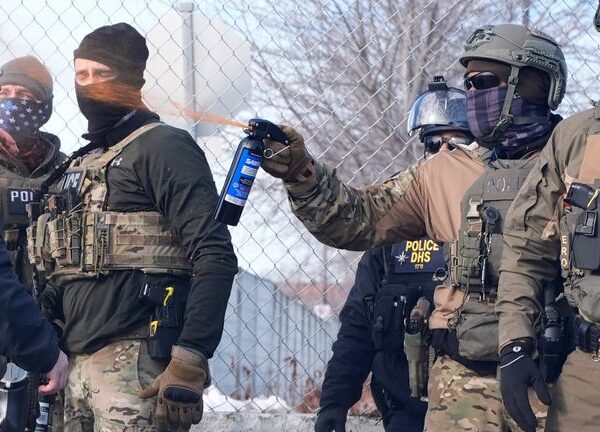
These actions have sometimes resulted in confrontations, with federal agents employing pepper spray to disperse crowds of residents and activists attempting to intervene. For a community composed of U.S. citizens, lawful permanent residents, and undocumented immigrants alike, these operations have generated an atmosphere of vigilance and anxiety.
A Community Under Pressure
South Minneapolis, home to many Somali-American residents, has been transformed into a zone of high tension. Business owners report declines in foot traffic, schools have expressed concerns over student attendance, and community organizations have warned of heightened stress among families living in the area.
For many Somali-American residents, the federal crackdown has created a dilemma: comply with federal authorities and risk family disruption, or maintain distance from law enforcement and risk being labeled obstructive.
This tension has sparked debates within the community about how to engage with authorities while preserving both safety and civil liberties.
Yusuf’s case has thus evolved from an individual arrest into a symbol of the larger national debate: the friction between federal immigration mandates and local policies designed to protect community trust.
The Policy Divide: Public Safety vs. Community Trust
At the heart of the conflict lies a fundamental disagreement on the best path to secure urban environments. The federal government frames sanctuary policies as inherently risky, arguing that such measures create gaps in law enforcement that allow dangerous individuals to remain in communities unchecked.
From the federal perspective, the cost of non-cooperation is clear:
Operational Gaps: Restrictions on honoring detainers or sharing information create loopholes in enforcement, allowing individuals with violent or serious criminal convictions to evade federal custody.
Endangering Residents: Federal authorities contend that local sanctuary policies inadvertently protect dangerous offenders, potentially placing the public at risk.
Encouraging Obstruction: Statements from local leaders and community rhetoric are viewed as emboldening residents to obstruct federal enforcement efforts, escalating tensions during arrests.
Yusuf’s arrest has been cited repeatedly by federal officials as a case study illustrating the consequences of these policies.
Conversely, local leaders and community advocates emphasize a different understanding of public safety. Their perspective prioritizes trust, cooperation, and civil liberties:
Preserving Witness Cooperation: By separating local police from federal immigration operations, residents are more likely to report crimes, testify against perpetrators, and participate in investigations.
Avoiding the Chilling Effect: Aggressive federal sweeps, they argue, discourage participation in community policing, reducing overall safety and undermining neighborhood stability.
Preventing Indiscriminate Enforcement: Critics highlight that federal operations can unintentionally target citizens and legal residents based on appearance or ethnicity, exacerbating fear and mistrust.
For proponents, sanctuary policies are not about shielding criminals; they are about ensuring that the civil rights of all residents are upheld and that community policing remains effective.
Legal and Constitutional Context
The dispute is rooted in complex legal doctrines surrounding federalism and immigration enforcement. While the federal government has exclusive authority over immigration, the “anti-commandeering” principle prevents it from forcing states or municipalities to act as federal agents.
Consequently, sanctuary policies legally limit local entanglement with federal operations without violating federal law itself.
Nevertheless, these legal distinctions provide little reassurance to communities caught in the political and operational crossfire. Residents face uncertainty, law enforcement faces scrutiny, and federal authorities claim their operations are hindered.
The case highlights how federalism and civil liberties intersect in ways that directly affect community trust and perceived safety.
National Political Implications
The arrest has already become a flashpoint in national political discourse. Federal officials and conservative lawmakers cite the incident to criticize Governor Walz and Mayor Frey, arguing that their policy choices allowed a convicted sex offender to remain free.
Local officials counter that the federal response disproportionately targets immigrant communities, erodes civil liberties, and risks alienating residents whose cooperation is essential for effective policing.
As political campaigns intensify, the “Minneapolis model” of sanctuary enforcement—and resistance to it—may serve as a central theme in debates over the future of American immigration policy.
Conclusion: A Crisis of Balance
The case of Mahad Abdulkadir Yusuf crystallizes a debate as much about the soul of a community as about the letter of the law. For federal authorities, it illustrates the consequences of non-cooperation and a perceived gap in public safety.
For local leaders and advocates, it exemplifies the ongoing tension between federal priorities and the need to maintain trust and cooperation within immigrant communities.
Ultimately, the question posed by the Yusuf case is deeply complex: where does community trust end, and where does public safety begin?
As the debate continues, Minneapolis stands as a microcosm of a national struggle—one where legal authority, social trust, and public safety collide in ways that defy easy answers.
The arrest and surrounding debate serve as a stark reminder that law enforcement, immigration policy, and community relationships are intricately interwoven, and that finding a sustainable balance requires careful attention, nuanced policymaking, and ongoing dialogue between all stakeholders.