The Fall of Caracas: A Deep Dive into the Capture of Nicolás Maduro and the New Era of Hemispheric Policy
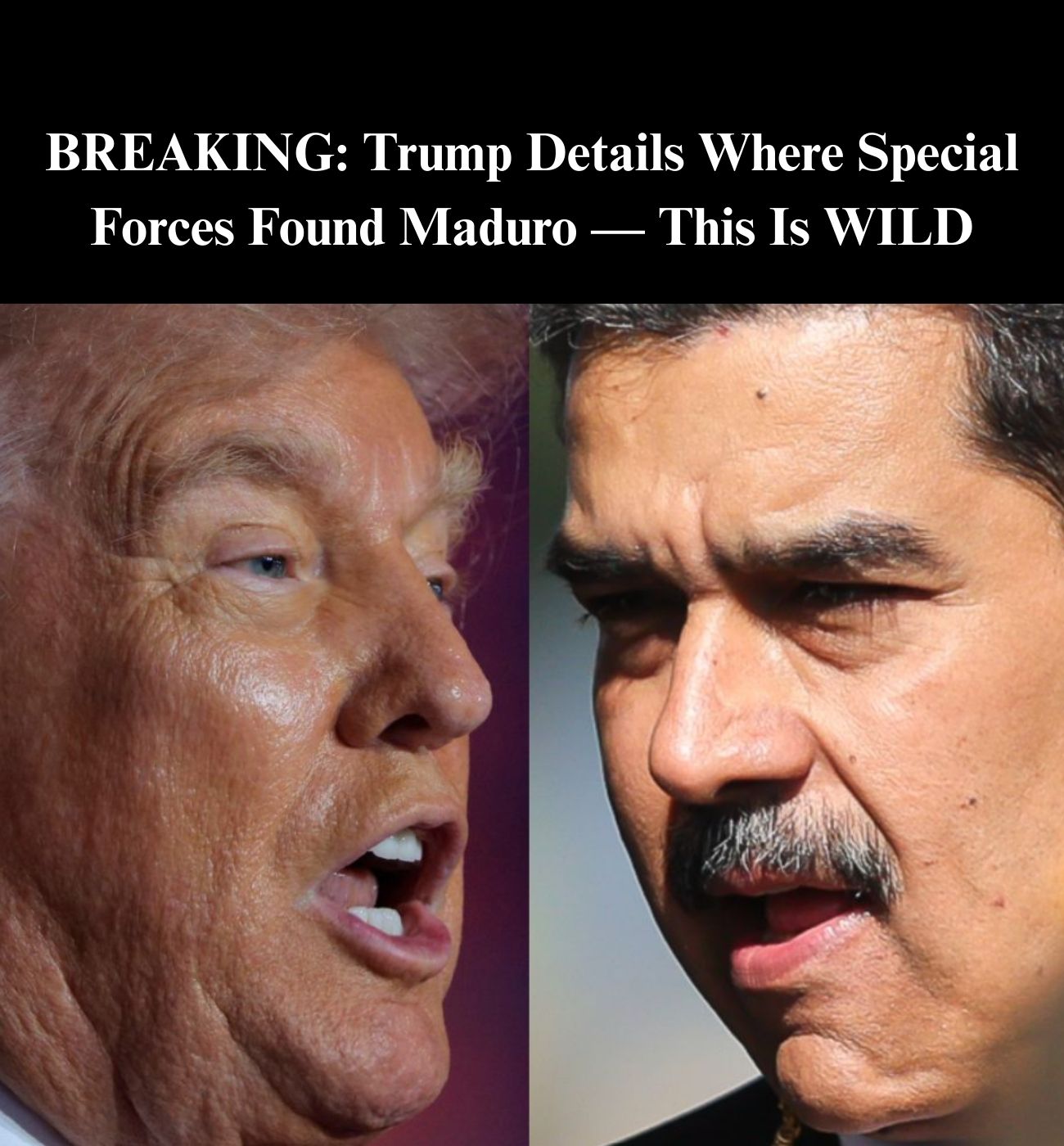
The geopolitical landscape of the Western Hemisphere was fundamentally altered in the early hours of a Tuesday in 2026. In a move that mirrored the high-stakes precision of the 1989 capture of Manuel Noriega, United States special operations forces successfully conducted a targeted mission to apprehend Nicolás Maduro. The operation, characterized by its speed and logistical complexity, has sparked a firestorm of debate regarding international law, executive power, and the future of Venezuelan sovereignty.
Part I: Anatomy of the Operation – “The Steel Safe Room”
According to briefings provided by the administration, the mission was executed by elite units, including the 160th Special Operations Aviation Regiment, commonly known as the “Night Stalkers.” The objective was the Miraflores Palace, a location that had been heavily fortified against such an eventuality for over a decade.
1. Tactical Execution and Surprise
The operation relied on a “shock and awe” strategy, utilizing electronic warfare to jam local communications and radar systems. Administration officials stated that the assault force breached the compound with such velocity that Maduro was unable to reach his secondary “safe room”—a reinforced bunker designed to withstand sustained ballistic and thermal attacks.
Reports indicate that U.S. engineers had anticipated a siege and were prepared to use thermal lances and diamond-core drills to breach the bunker. However, the speed of the “Night Stalkers” rendered these tools unnecessary. Within minutes, Maduro and his wife, Cilia Flores, were in custody.
2. The Atmospheric Impact
Witnesses in Caracas described at least seven distinct explosions echoing through the valley, likely tactical breaching charges used to neutralize security perimeters. The low-altitude roar of blacked-out helicopters served as the final signal that the years of diplomatic “maximum pressure” had shifted into a direct kinetic phase.
Part II: The Legal Framework – Narco-Terrorism and the “Full Wrath”
Shortly after the operation concluded, Attorney General Pam Bondi appeared before the press to detail the legal justification for the action. The Department of Justice unsealed a massive, multi-count indictment targeting Maduro and Flores.
1. The Narco-Terrorism Indictment
The charges center on the “Cartel of the Suns,” an alleged organization within the Venezuelan military involved in large-scale narcotics trafficking.
-
The Allegation: The U.S. government argues that the Maduro administration functioned as a criminal enterprise, using state resources to facilitate the transport of illicit substances to the United States.
-
Weapons Charges: The indictment includes counts related to the illegal possession of machine guns and destructive devices used to protect the trafficking routes.
2. The Concept of “Absolute Justice”
The Attorney General’s vow to bring the “full wrath of American justice” indicates a move toward a high-profile trial on U.S. soil. This sets the stage for a judicial proceeding that will likely be the most significant narco-terrorism case in history, surpassing even the trial of Joaquín “El Chapo” Guzmán.
Part III: Constitutional and International Fallout
While the administration celebrates a “stunning victory,” the halls of Congress are filled with “explosive questions.” The lack of prior notification to the “Gang of Eight” (the top leaders in Congress and members of the intelligence committees) has created a rift in Washington.
1. The War Powers Debate
Critics argue that the operation, conducted without a formal Declaration of War or a specific Authorization for Use of Military Force (AUMF) against Venezuela, constitutes an overreach of Article II powers.
-
Executive Defense: The administration asserts that the threat posed by narco-terrorism and the presence of adversarial foreign intelligence assets in Venezuela necessitated immediate, secret action to protect U.S. national security.
-
Legislative Pushback: Several Senators have called for immediate hearings to determine why the legislative branch was bypassed in a mission that could have easily escalated into a regional war.
2. Global Reactions
The international community remains divided. While several regional neighbors in the Lima Group expressed quiet relief at the removal of a regime they blamed for a massive refugee crisis, other global powers have condemned the “extrajudicial” nature of the capture, calling it a violation of the UN Charter and state sovereignty.
Part IV: Humanitarian and Economic Aftermath
The removal of the head of state has left a power vacuum in Venezuela that is both an opportunity and a crisis.
1. The Humanitarian Corridor
The U.S. has pledged immediate humanitarian aid to the Venezuelan people, who have suffered years of hyperinflation and food shortages. The goal is to stabilize the local currency and ensure that basic medical supplies reach the interior of the country within 72 hours of the transition.
2. The Energy Markets
Venezuela holds the world’s largest proven oil reserves. The capture of Maduro has already caused ripples in the global energy market. Analysts are closely watching to see if the removal of sanctions and the modernization of the PDVSA (the state oil company) will lead to a long-term stabilization of global fuel prices.