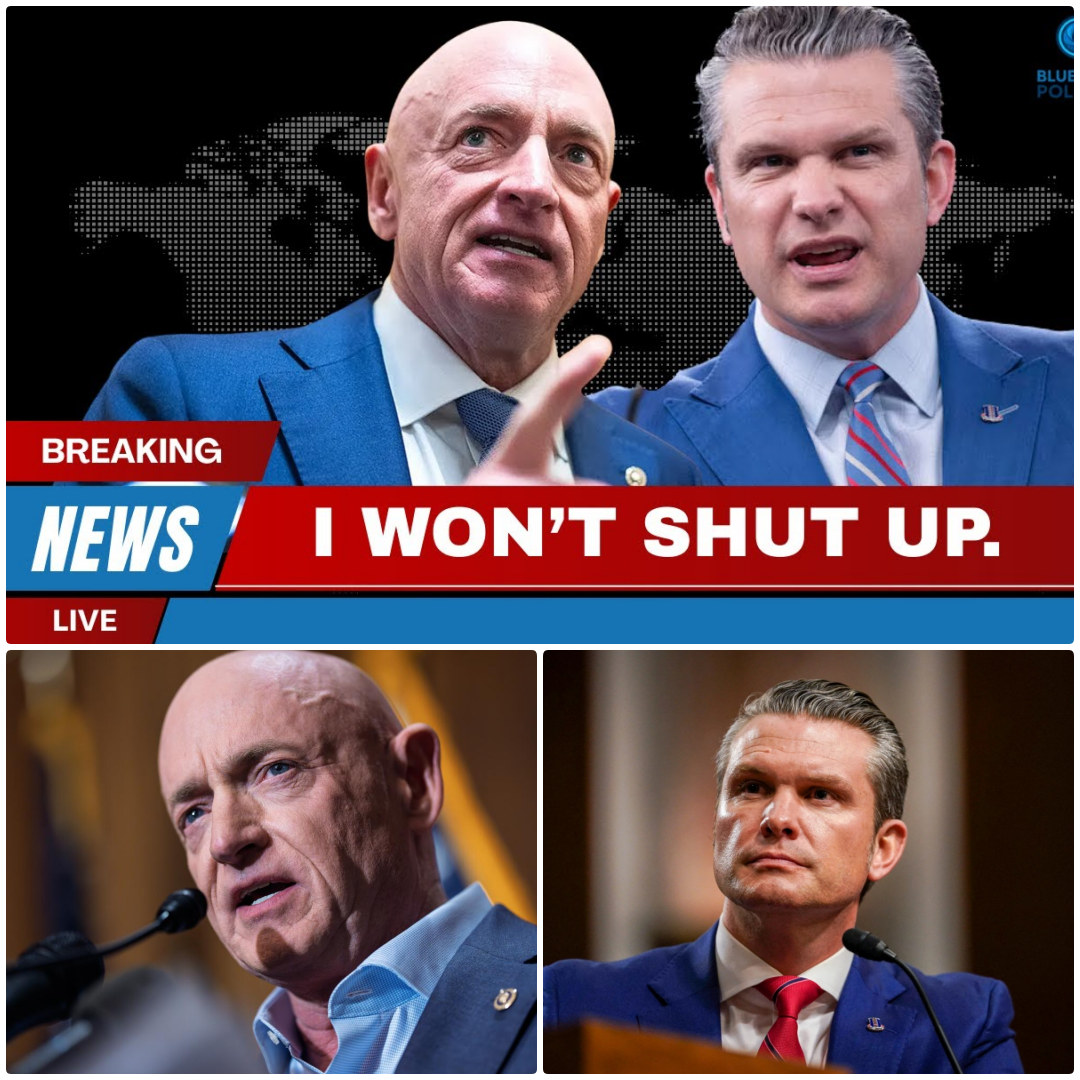
The quiet dignity of the United States Senate was shattered this week as Senator Mark Kelly, a man whose resume reads like a testament to American heroism, stood before the press to deliver a warning that should chill every citizen to the bone. This was not a speech about tax brackets or infrastructure; it was a visceral defense of the Constitution against what Kelly describes as an unprecedented campaign of intimidation led by the Department of War and the White House.
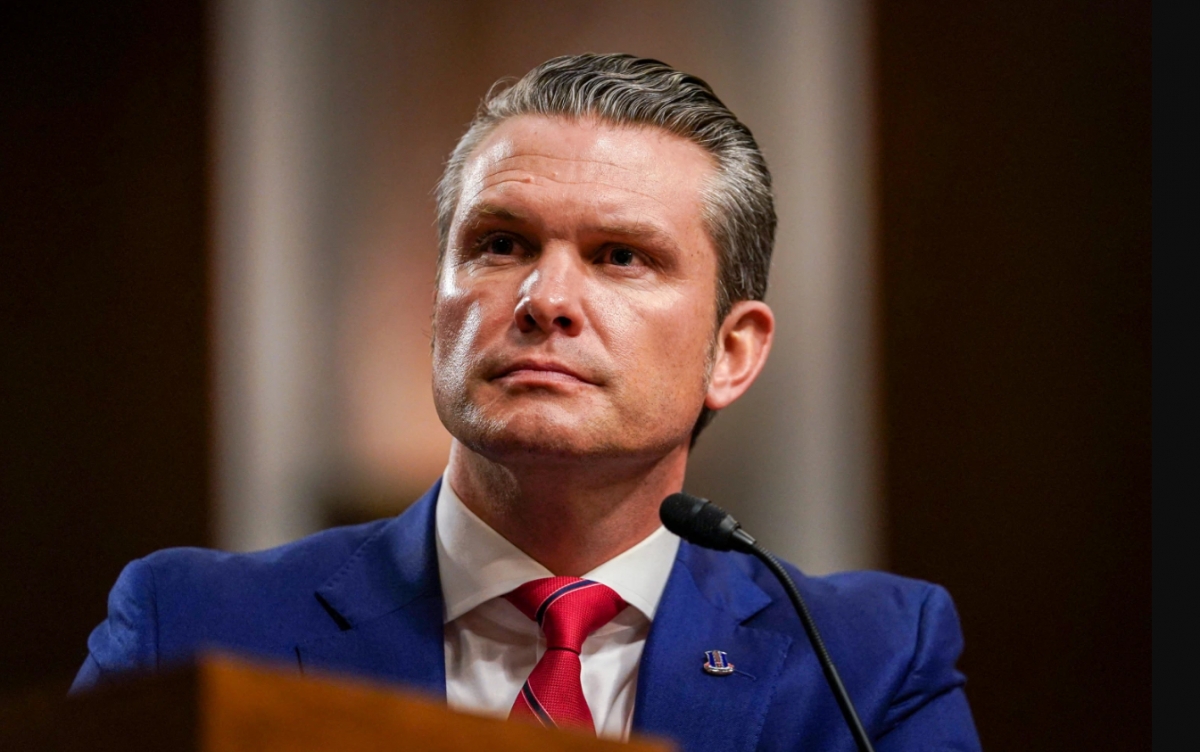
At the heart of the controversy is a formal letter of censure issued by Secretary Pete Hegseth, a document that threatens to strip Kelly of his rank and potentially subject him to criminal prosecution. For a retired Navy Captain who flew 39 combat missions and commanded missions in space, the threat of demotion for exercising his right to free speech is more than a personal insult—it is a signal that the rules of American democracy are being rewritten in real-time.
The catalyst for this escalation was a simple, yet foundational, video released by Kelly and five of his colleagues in mid-November. In the video, the lawmakers reminded members of the military of a principle drilled into every recruit at West Point: the duty to follow the law and the obligation to refuse illegal orders.
This concept is not a political opinion; it is a cornerstone of the Uniform Code of Military Justice (UCMJ) designed to prevent the military from being used as a tool for extra-legal activities. However, the administration’s reaction was swift and severe.
Senator Kelly revealed that Donald Trump’s response to the video was a suggestion that the lawmakers should be “hanged” or “executed” for their statements. When that rhetoric failed to silence the Senator, the Department of War stepped in with a formal letter of censure, attempting to use Kelly’s status as a retired officer to exert control over his actions as a civilian lawmaker.
This letter, according to Kelly, is a masterpiece of hypocrisy and a “height of irony” considering that Secretary Hegseth himself has made similar comments regarding military law in the past. But the document goes far beyond the video in question.
It explicitly cites Kelly’s criticism of the administration’s decision to fire top-tier admirals and generals—moves that Kelly asserts were motivated by race and gender rather than performance. As a member of the Senate Armed Services Committee, Kelly’s job is to provide oversight and voice concerns when he believes the military’s leadership is being hollowed out for political reasons.

If a decorated war hero and a United States Senator can be threatened with a court-martial for stating the law, what protection is left for the average veteran or active-duty service member? Kelly was quick to point out that this is not just about him; it is about the “erosion of every U.S. citizen’s First Amendment rights.”
He describes an environment of fear within the halls of government, where his colleagues—including some on the other side of the aisle—privately offer their support but remain silent in public. They have seen the consequences of speaking out, and they are afraid.
This culture of silence is exactly what the administration appears to be aiming for, creating a government surrounded by “yes-men” who will never challenge the executive branch, even when its actions lean toward the disastrous. The timing of this intimidation campaign is particularly suspect, as the Senate begins to grapple with major international and domestic crises.
Kelly pointed to the recent military-style operation in Venezuela as a primary example of where oversight is desperately needed. While the administration characterized the extraction of Nicolás Maduro as a “law enforcement operation,” the scale of the engagement—involving over 150 aircraft from multiple military branches—suggests something far more complex.
Kelly, with his deep operational background as a combat pilot, has been pressing for details on the legal authorization and the resources used in the mission. He argues that the American people deserve to know if their military is being bogged down in foreign conflicts while they struggle with the rising costs of rent and groceries at home.
Beyond the military sphere, Kelly is sounding the alarm on the administration’s domestic policies, specifically the gutting of the Affordable Care Act (ACA) to fund tax cuts for billionaires. He spoke passionately about his constituents in Arizona—in Yuma, Chandler, and Sedona—whose healthcare costs have skyrocketed from hundreds to thousands of dollars a month.
For Kelly, the administration’s focus on targeting political rivals like himself is a distraction from the real suffering of the American people. He views his role in the Senate as a responsibility to protect these citizens, and he refuses to let a letter from Pete Hegseth deter him from that mission.
“This letter or anything that Pete Hegseth says or does to me is in no way going to affect the way I do my job,” Kelly declared with a firm resolve that left no room for doubt. The legal battle ahead promises to be historic.
Kelly has already consulted with attorneys and is preparing a formal response to the censure letter. He has even gone so far as to dare the Department of War to follow through on its threats.
“If they want to court-martial me, bring it on,” he said, emphasizing that he is not afraid of the full force of the Department of Defense or the Department of Justice. His confidence stems from the fact that his statements were “accurate, truthful, and in accordance with the UCMJ.”
The prospect of a sitting Senator being tried in a military court for speech related to his legislative duties would represent a constitutional crisis of the highest order, challenging the very separation of powers that has defined the United States for over two centuries. As the nation watches this drama unfold, the central question remains: will the American people allow their representatives to be silenced by the threat of military discipline?
Senator Kelly’s stand is a reminder that the First Amendment is not just a privilege for the comfortable; it is a shield for the courageous. He is fighting not just for his own rank or reputation, but for the right of every American to criticize their government without fear of retaliation.
The outcome of this struggle will determine whether the U.S. military remains a professional force dedicated to the law, or becomes an instrument of political enforcement. For Mark Kelly, the path forward is clear.
He will continue to speak, continue to lead, and continue to remind the world that in a democracy, no one—not even the President—is above the law. The courage to stand alone is often the catalyst for collective action, and as Kelly stares down the Department of War, he carries the weight of a nation’s foundational freedoms on his shoulders.
Whether this ends in a courtroom or a withdrawal of the censure, the message has been sent: the spirit of service does not end with retirement, and the duty to the truth is a lifelong commitment. We must remain vigilant as this story develops, for the precedent set here will echo through the halls of history for generations to come.