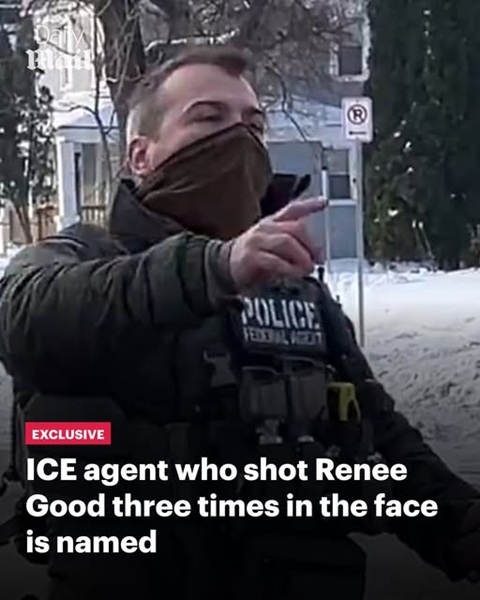
The fatal shooting of 37-year-old poet, mother, and community member Renee Nicole Good in Minneapolis by Immigration and Customs Enforcement (ICE) officer Jonathan “Jon” Ross has ignited national outrage.
Protests, and intense scrutiny of federal immigration enforcement practices. Good, a talented poet and devoted mothe.
Was shot while sitting in her car, and the incident has become a flashpoint in the ongoing debate over law enforcement use of force, officer accountability, and the presence of federal agencies in local communities.
Video footage circulating online shows Ross firing multiple shots into Good’s vehicle while she remained behind the wheel. Federal officials have defended Ross’s actions, stating that Good posed a threat to officers at the scene.
Minneapolis city leaders, community members, and many civil rights organizations, however, have disputed this characterization, describing the shooting as unjustified and calling for independent investigations into the circumstances surrounding her death.

Friends and family describe Renee Nicole Good as a deeply creative and caring individual. A devoted mother to her child, she was known for her poetry, her advocacy within her community, and her commitment to helping others.
The Trump administration quickly labeled her a “professional agitator” in response to the incident, a characterization widely rejected by those who knew her.
Good and her wife, Rebecca, had recently moved to Minneapolis after briefly leaving the United States following the 2024 election, seeking safety and stability. Instead, they encountered a tragedy that left a city grieving and ignited national debate.
The shooting has intensified calls for ICE to leave Minnesota. Community organizations, local activists, and some elected officials have demanded a reevaluation of federal enforcement operations within the city, citing concerns over officer conduct, escalation of force, and the protection of civilians.
These calls, however, have been firmly rejected by Department of Homeland Security Secretary Kristi Noem. In public statements, Noem asserted that federal operations would continue despite local opposition, emphasizing that the presence of ICE is critical to national security and enforcement priorities.
Jonathan Ross, the officer involved in the shooting, is a veteran ICE agent with significant field experience. However, his background has added complexity to the investigation.
Six months prior to the fatal shooting, Ross was seriously injured during an arrest when he was dragged by a vehicle. That incident required extensive medical treatment and rehabilitation.
Law enforcement sources suggest that this prior trauma could influence how Ross perceives threat situations and responds under pressure. While trauma may be considered in evaluating the reasonableness of his actions, it does not automatically justify the use of lethal force.
Investigators are closely reviewing whether the force applied in this incident, particularly the later shots fired into Good’s vehicle, was proportional and necessary.

The case has prompted a range of legal and ethical questions. Federal statutes allow law enforcement officers to use deadly force when they reasonably believe their life or the lives of others are in imminent danger.
Experts in criminal justice and law enforcement acknowledge that split-second decisions in high-stress situations can lead to tragic outcomes.
Yet, they also note that determining whether lethal force is appropriate requires careful examination of all available evidence, including the sequence of events, video footage, eyewitness testimony, and the actions of both the suspect and the officer.
Community reactions have been deeply emotional and politically charged. Vigils and public demonstrations have been organized to honor Renee Nicole Good, expressing grief, solidarity, and calls for justice.
Social media platforms have amplified these discussions, with posts ranging from outrage over the shooting to debates on immigration policy, law enforcement oversight, and the appropriate role of federal agencies in local communities.
Advocates for law enforcement stress the dangers officers face and argue that federal agents must be able to act decisively when confronted with perceived threats. Conversely, critics argue that the killing highlights systemic problems in policing practices, including inadequate de-escalation training and insufficient accountability for officers who use lethal force.
Friends of Good have described her as a creative force in the Minneapolis community. Her poetry often reflected themes of resilience, identity, and family.
Local literary circles, schools, and community centers remember her as someone deeply engaged with the people around her, someone who used her voice to inspire and support others.
Those who knew her have emphasized that she posed no threat to the ICE officer, framing the incident as a tragic and unnecessary loss of life rather than a defensive necessity.
The investigation into Ross’s actions is ongoing. Multiple agencies, including federal oversight bodies and the FBI, are examining all available evidence.

Sources familiar with the case note that the prior incident in which Ross was injured may play a role in assessing his perception of threat, but the key question remains whether the decision to fire multiple shots was legally and morally justified.
Investigators are carefully reviewing video footage, forensic evidence, and witness accounts to determine if the sequence of events aligned with standard law enforcement protocols.
Legal scholars note that incidents such as this often serve as catalysts for broader conversations about policing policies and community safety. Questions raised by this case include how federal agents interact with civilians, what constitutes a reasonable perception of danger, and how officers can be held accountable when their actions result in civilian deaths.
The shooting has also reignited debates over federal intervention in local law enforcement matters and the appropriate balance between national enforcement objectives and community trust.
As public attention grows, Minneapolis officials are under pressure to provide clear statements and assurances regarding oversight and accountability. Mayor and city council leaders have publicly emphasized the need for transparency and the protection of civil liberties while maintaining public safety.
Community organizations are calling for independent investigations and reforms to ensure that similar incidents do not occur in the future. The dialogue surrounding this case reflects the broader national conversation about policing, federal enforcement, and the protection of vulnerable communities.
In the days following the shooting, Renee Nicole Good’s family and friends were left grappling with grief and disbelief. Rebecca, her wife, expressed profound sorrow not only for the loss of her partner but also for the sudden and violent nature of the incident.
Friends recalled Renee’s warmth, her dedication to community programs, and her ability to connect with those around her through poetry and mentorship. “Renee was a mother, a writer, and a friend to everyone she met,” one longtime friend said. “She wasn’t a threat. She was a beacon in our lives.”
Community leaders in Minneapolis have called for increased transparency and independent oversight of federal law enforcement agencies. Local officials emphasize that the community’s trust in law enforcement depends on accountability and clear communication.

Minneapolis residents have organized vigils and marches to honor Good’s memory, highlighting broader concerns about ICE operations in urban communities.
Many participants chanted for reform, demanding clearer protocols and accountability mechanisms that prevent tragedies involving federal agents.
Legal analysts and law enforcement experts have weighed in on the case. Professor Linda Martinez, a criminal justice scholar, explained that evaluating officer use of force involves several key considerations: “The law allows officers to act when they reasonably perceive an imminent threat, but the situation must be assessed in its entirety. Factors such as prior trauma, the suspect’s behavior, and the officer’s perception are considered.
That said, the use of deadly force is always subject to scrutiny, especially when the individual shot did not pose a clear, immediate lethal threat.”
Ross’s six-month-old injury, where he had been dragged by a vehicle during an arrest, has added another layer to the legal analysis. Experts suggest that prior trauma can influence how an officer interprets perceived danger.
“Psychologically, prior experiences with serious injury can heighten a sense of threat,” Martinez said. “But this does not override the requirement for proportionality and necessity in the use of force.” Investigators are examining video footage, ballistics reports, and witness testimony to determine whether the later shots fired into Good’s SUV were legally justified.
Federal authorities maintain that Ross acted in accordance with training and federal law. ICE spokespersons assert that officers must make rapid decisions under dangerous conditions, often with limited information.
“We understand the community’s concerns,” one federal official said, “but ICE officers face real threats daily. Our personnel are trained to protect themselves and others, and we are cooperating fully with all ongoing investigations.”
Meanwhile, local activists argue that the shooting represents a failure of oversight and training. Civil rights organizations, including the ACLU, have called for independent investigations and policy reforms.
“Every life lost is a tragedy, and the loss of Renee Nicole Good highlights critical gaps in accountability,” an ACLU spokesperson stated. “Federal officers operating in local communities must be held to the highest standards, with clear mechanisms for oversight to prevent unnecessary deaths.”

The political dimension of the incident has intensified debates about immigration enforcement. Former President Donald Trump defended the officer’s actions, labeling Good a “professional agitator” in social media posts, a characterization strongly opposed by local leaders and those who personally knew her.
These opposing narratives have deepened political divides, fueling conversations about federal authority versus local autonomy, and the ethical responsibilities of officers when engaging with civilians.
Experts in public policy and law enforcement emphasize that the shooting may influence future discussions about ICE operations in urban areas. Calls for federal withdrawal from Minnesota highlight the tension between national enforcement priorities and community safety.
DHS Secretary Kristi Noem has maintained that operations will continue, stressing that federal enforcement is necessary for national security, yet the public outcry underscores the importance of balancing these objectives with community trust.
Psychologists and social workers note the profound impact of such incidents on the broader community. Trauma extends beyond immediate victims, affecting neighbors, friends, and families who witness or hear about the violence.
Mental health professionals stress the need for counseling and support for those indirectly affected, particularly in communities with frequent federal law enforcement operations.
As investigations continue, the outcome will likely influence both policy and public perception. If Ross’s actions are deemed justified under federal law, questions remain about whether additional training, de-escalation protocols, or oversight mechanisms could prevent future tragedies. Conversely, if any misconduct is identified, the case may result in policy revisions, disciplinary measures, and legal consequences.
In either scenario, Renee Nicole Good’s death has ignited urgent conversations about accountability, civil rights, and the ethics of law enforcement.
Community organizers continue to press for reforms. Proposals include mandatory body cameras for federal agents in urban settings, independent review boards to evaluate use-of-force incidents, and standardized training on de-escalation techniques.
Activists argue these measures are essential to restore public confidence and protect civilians, ensuring that federal enforcement operates with transparency, consistency, and respect for human life.
Media coverage has been extensive, with national news outlets, social media, and local reporting all contributing to a heightened awareness of the incident.
Analysts note that such widespread coverage can influence policy debates, prompt legislative hearings, and encourage law enforcement agencies to review practices.
At the same time, the intense scrutiny places pressure on investigators to provide clear, accurate, and timely findings, balancing public demand for answers with procedural fairness.
The human dimension of the tragedy remains at the forefront. Family members and friends continue to mourn Renee Nicole Good, honoring her legacy as a mother, poet, and member of the community.
Memorial events highlight her contributions and emphasize the personal cost of violent encounters between civilians and law enforcement. Residents of Minneapolis have expressed grief, solidarity, and determination to seek accountability, reflecting the deep emotional resonance of the incident.
Ultimately, the shooting of Renee Nicole Good serves as a national case study in the complexities of federal law enforcement, use-of-force policy, and community relations.
It underscores the challenges of balancing officer safety with civilian protection, the importance of transparency and oversight, and the enduring impact of tragedy on families and communities.
The ongoing investigations, legal reviews, and public debates will continue to shape the narrative, but the personal loss and societal ramifications are already profound.
As Minneapolis continues to grapple with the aftermath, residents, officials, and civil rights advocates are collectively examining how to prevent future incidents. Discussions range from improved training protocols to the ethical obligations of federal agents and the rights of civilians under threat.
The case has ignited reflection on broader questions of governance, trust, and the role of law enforcement in safeguarding communities while upholding justice.
Renee Nicole Good’s death is not only a personal tragedy but also a focal point for national discourse on law enforcement practices, federal authority, and civic accountability.
Her life, her contributions, and her untimely death have galvanized communities, spurred legislative attention, and amplified conversations about the intersection of safety, policy, and human dignity.