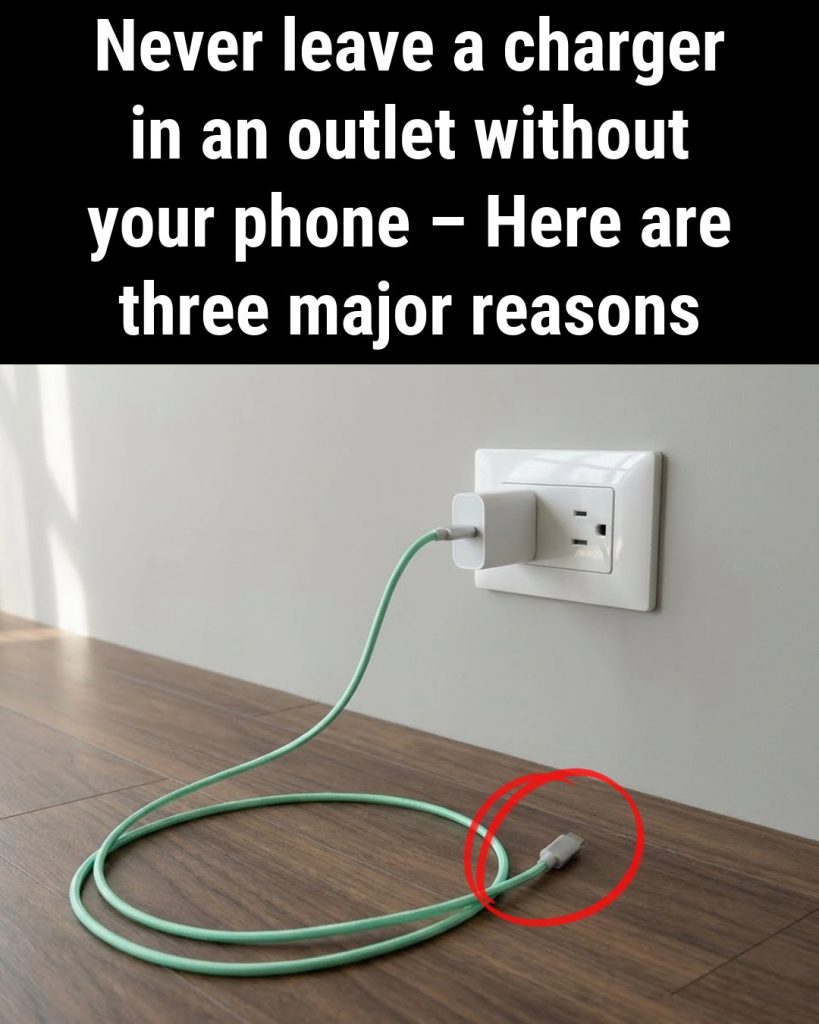
That lonely charger in the wall is not a catastrophe waiting to happen. It is not completely harmless either. It sits there quietly, a small plastic shape that never calls attention to itself. Even when it is not powering a phone or tablet, it still sips electricity. The amount is small, almost teasingly small, and easy to shrug off. Yet every outlet in a home tells the same story. A forgotten charger behind the couch, another tucked beside the bed, a third beneath a desk. Each one adds its own little pull on the current. When people talk about wasted energy, the focus usually lands on big appliances or dramatic changes in lifestyle. Chargers rarely get a mention, but they should. Tiny losses spread across every room can quietly grow into something meaningful.
Multiply that picture by millions of households and a different scale appears. That mild trickle of energy becomes part of a global waste problem that most of us never really see. It is hard to feel the impact of something so small. Still, the numbers do not disappear simply because we do not notice them. Electricity must be produced, stored, and moved, and every watt takes work. Power plants burn fuel or spin turbines. Infrastructure carries current through long distances. Energy demand stacks up, hour after hour, day after day. A charger left in a socket becomes a reminder that modern convenience has a shadow, one made of countless overlooked habits that add up without asking our permission.
There is another piece to the story, and it hides inside the charger itself. Electronic components age, even when hardly used. A constant flow of electricity creates heat, and heat slowly wears things down. Insulation becomes brittle. Soldered joints weaken. Outlets loosen over time, especially when cords are tugged or twisted. None of this is dramatic. In fact most nights nothing at all will happen. Millions of chargers sit plugged in without so much as a flicker. Yet the rare times when something does go wrong often come from frayed cords, overheated plugs, or knockoff adapters that cut corners during manufacturing. Some cheap chargers lack proper protection and can run hotter than they should. Others may fail without warning. The risk is low, but not zero.
Power strips tell a similar tale. They gather chargers, lamps, computers, game systems, and anything else that wants a place to connect. A single strip can quietly become crowded, drawing more current than it can safely handle. Again the danger is rare, which is exactly why it is easy to ignore. People trust routines. If nothing bad has happened before, it is tempting to believe nothing bad will happen later. That belief offers comfort, but it can also blur awareness.
Unplugging chargers when the job is done becomes a small act of attention. It feels simple, almost effortless. Yet it stretches the life of the charger. It keeps cords from heating hour after hour. It lightens the load on outlets and strips. It saves a little money on the electric bill. Most important, it gives a sense of control in a world wired to stay always on. We are surrounded by glowing screens and humming circuits. We move through rooms bright with digital purpose. Something as ordinary as pulling a plug reminds us that we still choose how we use our energy. It is not a dramatic change. It is simply a conscious one. And sometimes that is enough to make a quiet difference.