Boxer Imane Khelif has announced a major career move following her Olympics controversies.
Khelif, the 26-year-old Algerian boxer who became one of the most talked-about athletes of the 2024 Paris Olympics, is now making headlines once again, this time for a major career move into professional boxing.
The journey to this announcement has been anything but smooth, shaped by a historic gold medal win, an international gender eligibility controversy, and the relentless glare of global media scrutiny.
Who Is Imane Khelif?
Born and raised in Algeria, Imane Khelif discovered boxing as a child and quickly distinguished herself as one of the country’s most gifted sporting talents.
She has competed in the women’s welterweight (66kg) division throughout her career, representing Algeria on the international stage since the late 2010s.
Her perseverance through poverty, gender-based discrimination in her home country, and intense international scrutiny has made her a symbol of resilience both inside and outside the ring.
Khelif has always competed in the women’s category and has been consistent and unequivocal about her identity. As she told CNN in February 2026: “I’m not transgender. I’m a woman. I want to live my life. Please do not exploit me in your political agendas.”
She has been boxing with the International Boxing Association (IBA) since 2018, rising through the ranks to become one of the most formidable amateur boxers in the world.
Olympic glory in Paris 2024
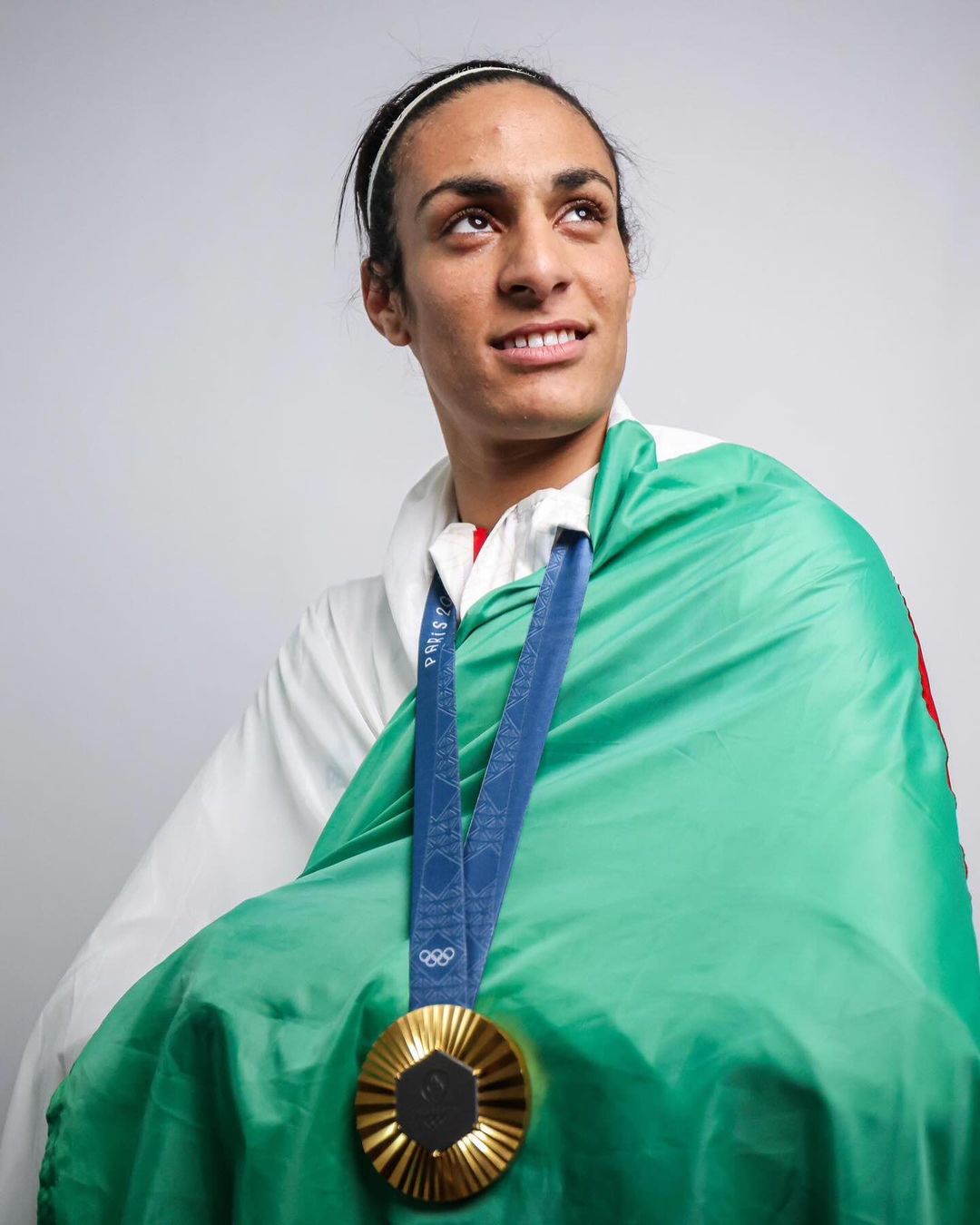
At the 2024 Paris Olympics, Khelif delivered the performance of her life. Competing in the women’s 66kg welterweight category, she fought her way through the bracket to the gold medal final at Roland Garros, one of the world’s most iconic sporting venues.
In the final, she defeated China’s Yang Liu by unanimous decision in a hard-fought contest between two evenly matched opponents.
The victory made Khelif the first Algerian woman to win an Olympic boxing gold medal, and the first Algerian boxer of any gender to do so since 1996. The 15,000-strong crowd at Roland Garros erupted in cheers, chanting ‘Imane! Imane!’ as she leapt onto her coach’s shoulders in jubilation. The Algerian national anthem rang out across the arena as an entire nation celebrated with her.
Reflecting on the magnitude of her win, Khelif declared to The Guardian: “My honor is intact now. The attacks that I heard in social media were extremely bad and they are meaningless and they impact the dignity of people and I think that now people’s thinking has changed.”
Her path to the final had not been without incident. In her first bout of the tournament, her opponent Angela Carini withdrew within just 46 seconds after receiving a single punch, a moment that ignited fierce debate online and in the press, and that drew the attention of politicians and celebrities worldwide.
The controversies she has faced
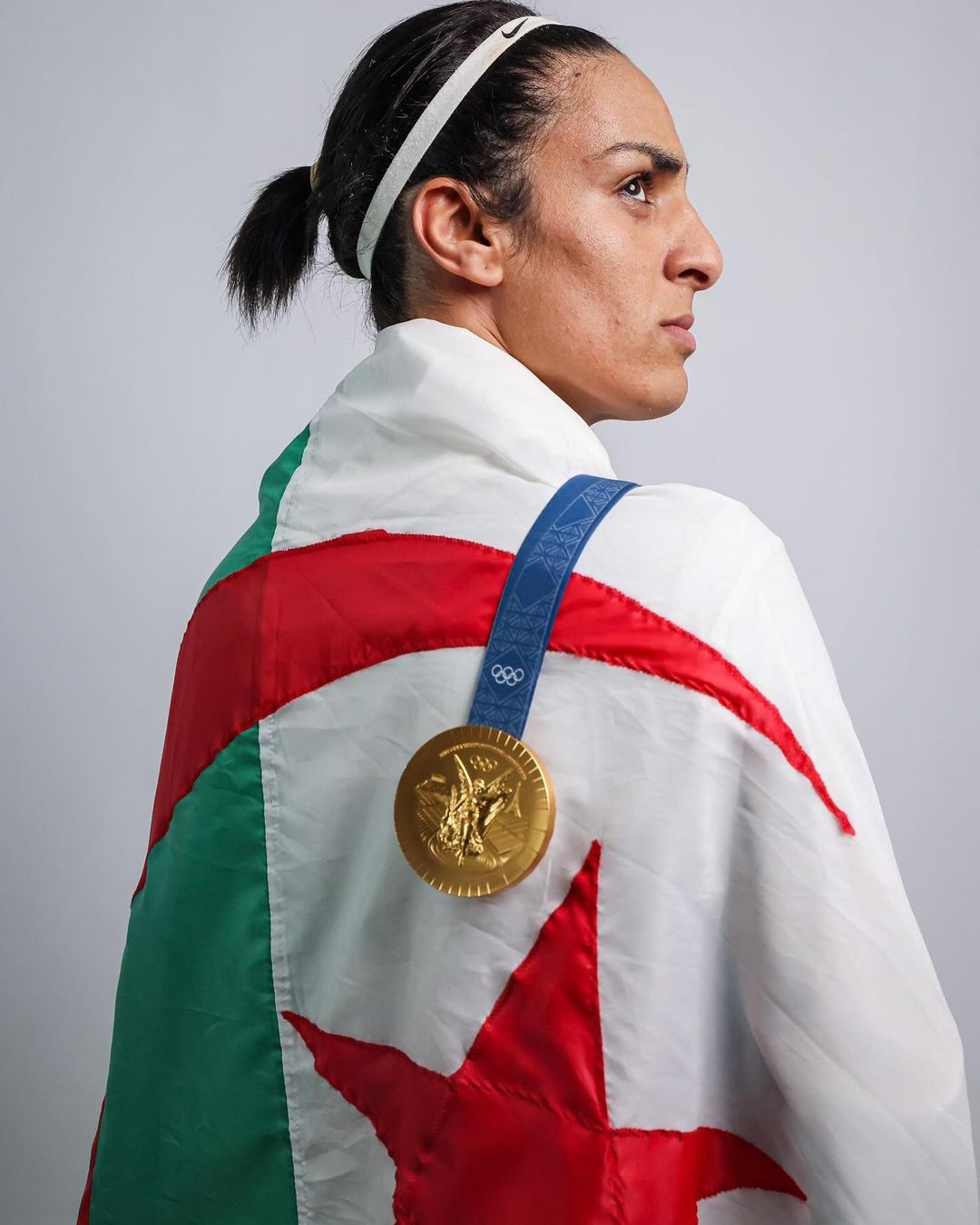
The controversy surrounding Khelif’s participation in the Olympics traces back to the 2023 World Championships, where both she and Taiwanese fighter Lin Yu-ting were disqualified by the International Boxing Association (IBA) for allegedly failing gender eligibility tests.
The IBA stated that Khelif ‘failed to meet the eligibility criteria for participating in women’s competition.’ Some reports cited the IBA’s claim that Khelif has XY chromosomes, speculating she might have differences of sexual development (DSD), though the BBC has noted it could not independently confirm this.
The International Olympic Committee (IOC), however, rejected the IBA’s findings. It had already stripped the IBA of its recognition as boxing’s international governing body in June 2023, citing concerns over corruption, governance, and financial transparency.
For the Paris Games, the IOC ruled that any athlete whose passport identified them as female was eligible to compete in the women’s division, a policy that allowed Khelif and Lin to participate.
Khelif has addressed her detractors with characteristic directness, saying per The Guardian: “As for whether I qualify or not, whether I am a woman or not, I have made many statements in the media. I am fully qualified to take part in this competition. I’m a woman like any other woman. I was born a woman, I lived a woman, and I competed as a woman, there’s no doubt about that. [The detractors] are enemies of success, that is what I call them. And that also gives my success a special taste because of these attacks.”
She also expressed personal disappointment at the IBA: “They hate me and I don’t know why. I send them a single message: with this gold medal, my dignity, my honor is above everything else.”
The controversy extended into the political sphere. US President Donald Trump referred to Khelif as a ‘male boxer’ after signing an executive order that prevents transgender women from competing in female sports categories — a characterisation Khelif flatly rejected. The IOC itself clarified: “This is not a transgender case.”
In February 2025, the IBA launched a legal case against the IOC for allowing Khelif to compete at Paris, citing safety concerns over gender eligibility. Khelif called these ‘baseless accusations that are false and offensive.’
Willing to take test for 2028 Olympics
A new governing body for amateur boxing, World Boxing, was granted provisional recognition by the IOC in February 2025. The organisation subsequently introduced mandatory PCR genetic testing for all athletes wishing to compete in its female category, a test designed to determine sex at birth by detecting the presence or absence of the Y chromosome (specifically the SRY gene).
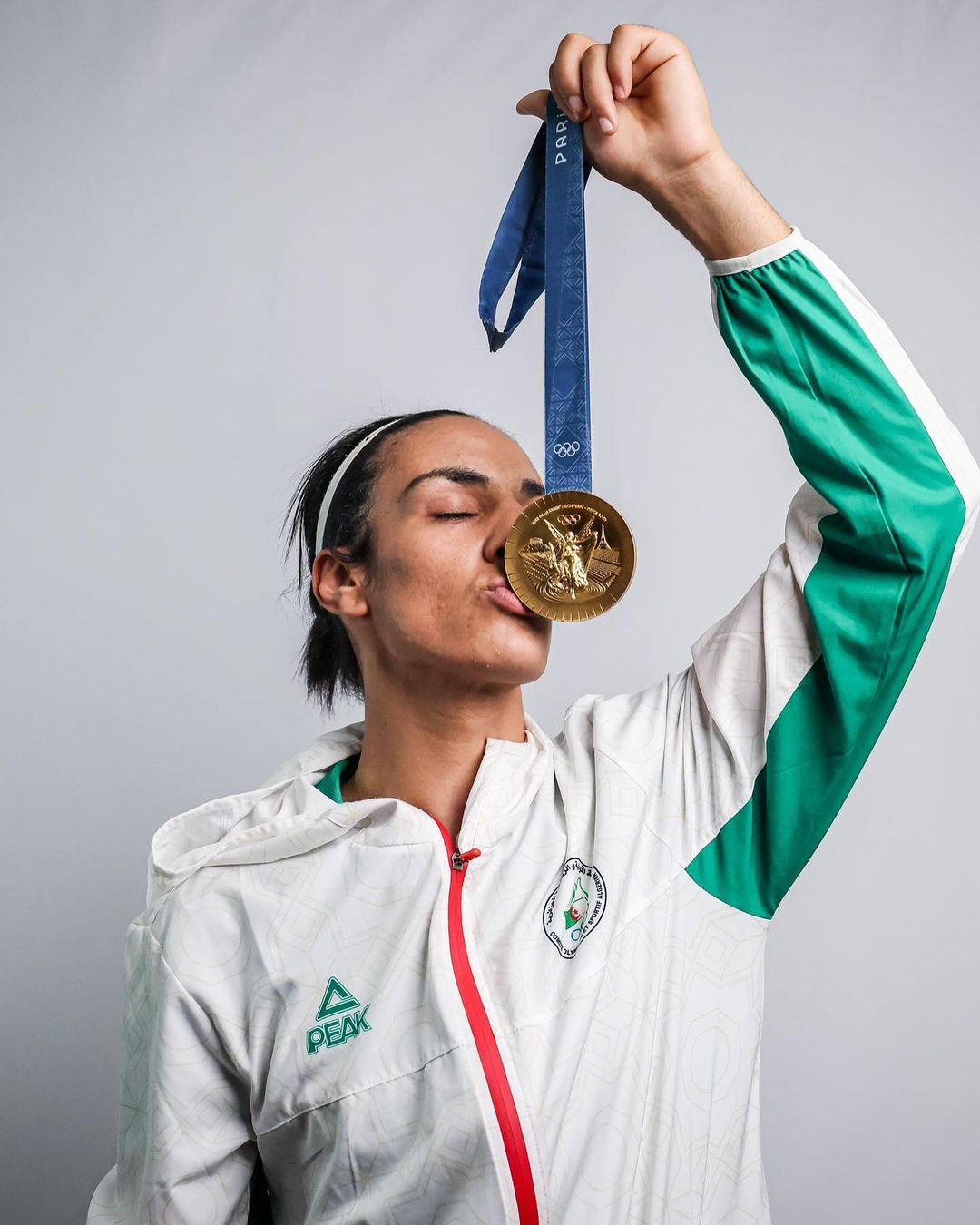
World Boxing announced in May 2025 that Khelif would not be permitted to fight in the female category at its competitions until she undergoes the test.
The organisation had initially cited Khelif when announcing the policy, and later apologized for doing so. Khelif had been set to make a competitive comeback at the Eindhoven Box Cup in June 2025.
Khelif subsequently lodged an appeal with the Court of Arbitration for Sport (CAS) over World Boxing’s mandatory testing policy. A hearing on that case remains pending.
Despite the ongoing legal battle, Khelif has made clear she is not opposed to testing in principlem provided the right body conducts it, per the BBC.
Speakin to CNN in February 2026, she said she had ‘nothing to hide’ and would comply with any requirements set by the IOC: “Of course, I would accept doing anything I’m required to do to participate in competitions. They should protect women, but they need to pay attention that while protecting women, they shouldn’t hurt other women.”
Her nuanced position, open to testing, but insistent that such processes must be fair, consistent, and not weaponized, has drawn admiration from advocates who argue that the treatment of Khelif reflects broader issues of how intersex and female athletes from non-Western countries are scrutinised and policed in international sport.
The major career move
Amid all of this, Khelif has been planning her next chapter, and it is a significant one.
At a press conference on October 20, 2024, Khelif announced that she intends to leave amateur boxing and turn professional. Reporting from The Independent confirmed her announcement: “I will soon enter the world of professional boxing. I have many offers. Currently, I have not decided where I will enter professional boxing. But very soon, I will take this step. We, as Algerians, would like to see our level in the field of professionalism.”
At the same press conference, Khelif also revealed that a documentary charting her life and career is currently in development, a project likely to reach a global audience given the remarkable, turbulent, and ultimately triumphant story it has to tell.