In July 2025, the United States military confirmed the deployment of approximately 200 U.S. Marines to Florida to support federal immigration operations conducted by U.S.
Immigration and Customs Enforcement (ICE). This move — announced by U.S. Northern Command and authorized by Defense Secretary Pete Hegseth.
Forms part of a broader federal effort to assist ICE with logistical and administrative tasks amid heightened immigration enforcement and increasing operational demands. The deployment has drawn significant public scrutiny, touching on complex issues related to the use of military personnel on U.S. soil, the evolving role of the armed forces in support of domestic agencies, and broader national debates surrounding immigration policy and enforcement.
What the Marines Are Doing: Support, Not Enforcement
Under the terms of the deployment, the Marines sent to Florida are not participating in law enforcement actions or direct detention activities.
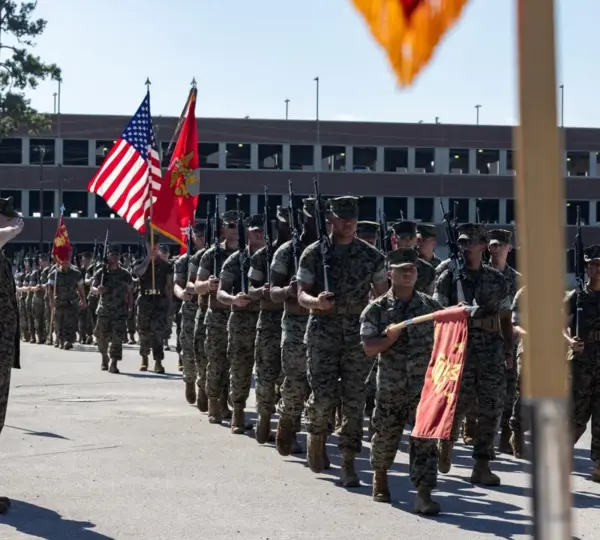
Instead, they are assigned to non‑enforcement duties designed to help ICE manage administrative burdens and operational backlogs within detention facilities and field offices. Specifically:
The Marines come from Marine Wing Support Squadron 272 based at Marine Corps Air Station New River in North Carolina.
Their roles are focused on administrative, logistical, and clerical tasks — such as vehicle maintenance support, supply coordination, data processing, and case management assistance — rather than arresting or processing individuals themselves.
Officials emphasized that the troops will not interact directly with individuals in ICE custody and are prohibited from carrying out enforcement functions, such as detention operations, apprehension, or interview processing.
This division of responsibilities was highlighted by U.S. Northern Command, which noted that the deployment is intended to free up ICE personnel to focus on core enforcement duties while ensuring logistical and administrative effectiveness.
The stated operational justification pinpoints rising caseloads and pressure on existing personnel in states like Florida, Texas, and Louisiana, where immigration detention facilities have been operating near capacity amid increased arrivals and processing demands.
Background and Authorization: How This Came About
The move traces back to a May 2025 request from the Department of Homeland Security (DHS) seeking supplemental personnel to support ICE operations.
The Pentagon subsequently authorized the mobilization of up to 700 military personnel to assist in various administrative and logistical roles across multiple states, including Florida, Louisiana, and Texas.
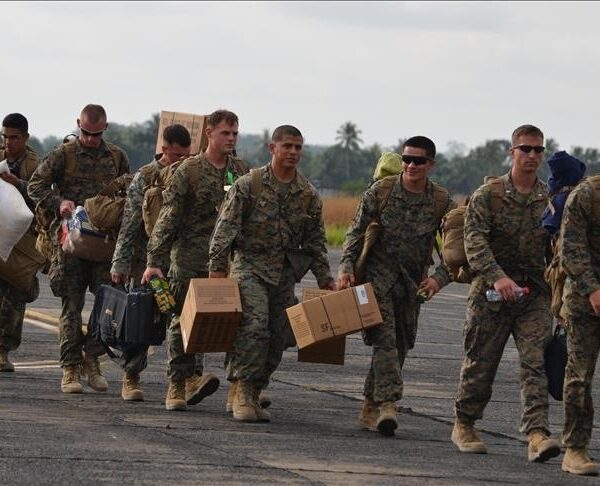
Defense Secretary Pete Hegseth signed off on the mobilization in June 2025, stating that the troops would be used strictly in support capacities and not in law enforcement roles.
The formal authority for such deployments comes under Title 10 of the U.S. Code, which allows the Department of Defense to assign active‑duty forces to provide support to civilian agencies when requested and legally permissible.
Officials have been careful to emphasize this distinction, underscoring that active‑duty military personnel are prohibited from performing traditional immigration enforcement or policing duties unless specifically authorized under separate legal frameworks.
Accordingly, the Marines’ mission has been framed as administrative augmentation, not enforcement.
The Broader Federal Effort: How Florida Fits In
The deployment to Florida is part of a larger federal initiative responding to elevated border arrivals and domestic immigration enforcement operations. Alongside the 200 Marines in Florida, additional personnel were approved to assist ICE in other regions:
Louisiana and Texas were also identified as states where military support may be forthcoming.
The total authorized personnel — up to 700 service members — include active‑duty Marines, National Guard units, and reserve forces, all earmarked for logistical roles.
Florida, in particular, has been a focal point due to its geographic position as a transportation hub by air and sea, especially for migrants arriving from the Caribbean and other regions.
The region’s detention facilities have seen increasing strain as processing times and case volumes rise, prompting DHS to seek federal support.
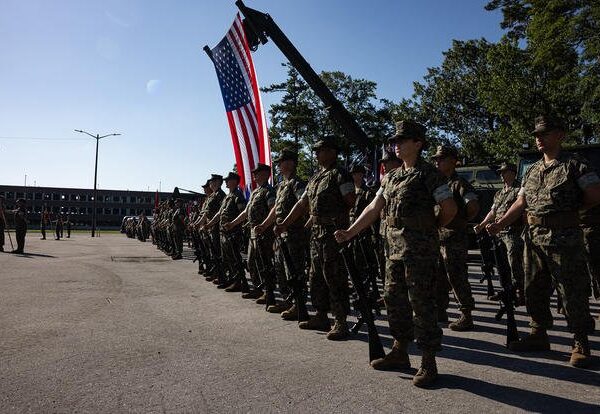
Officials have not publicly confirmed the specific facilities where Marines are stationed in Florida or the exact duration of the deployment, leaving some local leaders and advocates seeking additional transparency on operational details and timelines.
Legal Framework: Military Support and Domestic Policy
The use of active‑duty military personnel in support of civilian operations on U.S. soil must align with long‑standing legal prohibitions and authorizations.
Under the Posse Comitatus Act, the U.S. military is barred from engaging directly in civilian law enforcement unless expressly authorized by the Constitution or Congress.
The current deployment adheres to this principle by restricting Marines to supportive, non‑enforcement roles — strictly administrative and logistical.
Military assistance in domestic contexts is typically governed by Title 10, whereas direct involvement in law enforcement generally requires a different legal authority such as the Insurrection Act or National Guard activation under Title 32, which places troops under state control.
The distinction matters legally and constitutionally, and senior Pentagon officials have repeatedly underscored their intent to remain within the bounds of Title 10 support.
This careful legal framing aims to balance the demand for assistance with longstanding American traditions separating military roles from civilian policing.
Still, the broader use of troops to back up immigration enforcement has reignited debates about the boundaries between support and enforcement functions.
Political and Public Response
The decision to deploy Marines, even in a non‑enforcement role, has sparked significant discussion and debate across political, legal, and social spheres.
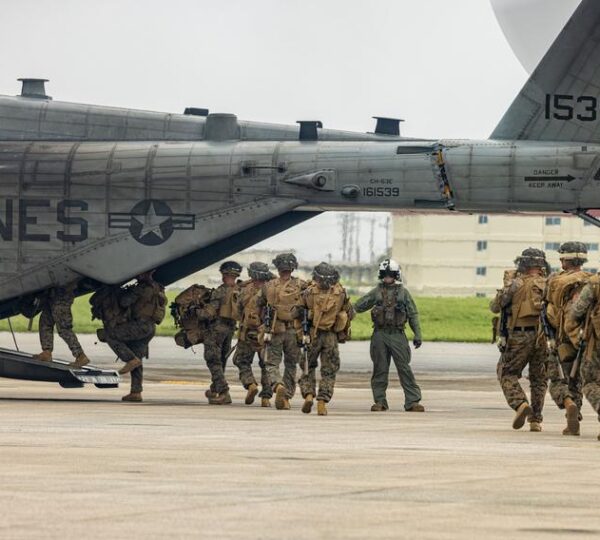
Supporters’ Perspective
Supporters of the deployment, including some lawmakers and administration officials, argue that:
Operational support is essential given the expanded workload within ICE detention facilities and field offices.
Assigning Marines to administrative and logistical responsibilities frees ICE agents to concentrate on enforcement and casework.
The move demonstrates interagency cooperation and an effective use of federal resources in response to humanitarian and procedural pressures.
Backers frame the action as a practical response to backlogs and processing challenges rather than an expansion of military enforcement powers.
Critics’ Concerns
Critics, including civil liberties organizations and some lawmakers, have raised objections centered on:
Militarization optics: Even if Marines are not involved in law enforcement, their visible presence at immigration facilities may contribute to public perceptions of military involvement in civilian issues.
Community impact: Immigrant advocacy groups warn that the presence of uniformed service members — even in administrative capacities — could heighten fear in immigrant communities and discourage cooperation with legal processes.
Blurred boundaries: Some observers argue that expanded military support for domestic agencies, even in a limited role, raises questions about the erosion of the traditional separation between military and civilian spheres.
Transparency and oversight: Critics have demanded more detailed public reporting on the duties assigned, deployment duration, use of resources, and mechanisms to ensure compliance with legal restrictions.
These debates echo broader national conversations about immigration policy, federal resource allocation, and the appropriate role of the military in domestic affairs.
How the Deployment Fits Into Broader Interior Enforcement Actions
The Marine deployment is occurring against the backdrop of expanded immigration enforcement operations within the United States. In 2025, federal authorities have launched several measures — including immigration arrests, case processing expansions, and detention capacity growth — that have placed new demands on ICE and other agencies.
In addition to the Florida deployment:
Law enforcement operations such as Operation Midway Blitz in Chicago have been conducted to arrest individuals with prior criminal records under immigration policy directives.
National Guard units in multiple states have been activated in support of immigration processing, providing administrative, logistical, and case management assistance where permitted.
In some cases, earlier plans to use military personnel directly in contact with detainees were adjusted when Pentagon officials determined such duties could violate legal limits on military involvement with civilian custody.
As a result, the emphasis shifted to ensuring military support remains within permitted bounds — administrative and logistical — rather than custodial or enforcement activities directly involving migrants.
What Does This Mean Going Forward?
The deployment of Marines to support ICE operations in Florida represents a significant moment in the evolving use of the U.S. military in domestic federal support roles. Although the troops are performing non‑enforcement duties, the policy has sparked broad public debate about:
The limits of military involvement in domestic government functions
The balance between immigration enforcement and civil liberties
Transparency and oversight of interagency operations
Long‑term implications for federal support models in migration policy
Proponents emphasize that the assignment helps relieve overwhelmed ICE workloads without expanding enforcement powers.
Opponents warn that even the presence of military personnel in immigration settings could have unintended consequences for public trust and community relations.
Officials from both the Pentagon and DHS have pledged ongoing monitoring and oversight to ensure the mission remains compliant with U.S. law and focused solely on administrative assistance.
The exact duration of the Marines’ deployment, and whether additional support waves will be mobilized, has not been publicly confirmed, leaving future developments dependent on policy shifts and operational needs.
Conclusion: A High‑Profile Example of Interagency Support and Debate
The deployment of 200 Marines to Florida in support of ICE operations marks a notable example of interagency cooperation in response to complex immigration challenges in 2025.
Designed to relieve administrative burdens and enhance logistical support without engaging in law enforcement, the mission has nonetheless highlighted the delicate balance between meeting operational needs and upholding traditional military‑civilian boundaries.
As the situation unfolds, policymakers, civil liberties advocates, legal experts, and affected communities continue to monitor both the short‑term effects and long‑term implications of using military assets in support of domestic federal agencies.
The discussions surrounding this deployment reflect broader national tensions over immigration policy, public safety, federal authority, and the appropriate roles of military and civilian institutions in service of the nation.