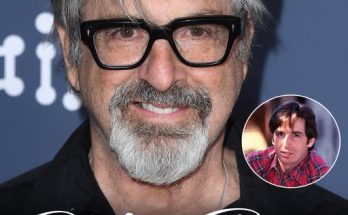
Joe Rogan used a lengthy exchange with Steve-O on the latest episode of The Joe Rogan Experience to challenge remarks the Jackass star had previously made about transgender people facing severe oppression, turning what began as a broader discussion of gender identity into one of the most talked-about moments from the conversation. The episode, listed as JRE #2463, featured Steve-O as Rogan’s guest and included a section in which Steve-O revisited a personal encounter that had already shaped his public thinking on the issue.
In the exchange, Steve-O said he had been deeply affected by a conversation with a transgender person, recalling that the person had described “a level of oppression” that “genuinely” broke his heart. He said that conversation included claims that the person was not allowed to use the bathroom at their own workplace and that politicians were trying to put transgender people in internment camps. Rogan immediately pushed back. According to the transcript, he replied that the bathroom issue was not about denying access to all facilities but about access to spaces “that doesn’t align with their biological sex,” before pressing Steve-O on the more explosive claim and asking: “Who’s doing that? What politicians are saying they should be putting [transgender people] in internment camps?”
Rogan then dismissed the idea of any organised political drive toward such camps, saying there might be “one kook out there” seeking attention but “there’s no movement to try to put transgender people in internment camps.” That line, more than any other from the discussion, quickly became the focal point of coverage and social media reaction because it crystallised the central disagreement between the two men. Steve-O did not continue to defend the claim in detail after Rogan challenged it. Instead, the conversation moved into Rogan’s broader views on sex, biology, sport and prisons, with Rogan arguing that people should still be treated kindly even where he disagreed with aspects of transgender activism or policy. He said he tries “to be kind to everyone” and that being trans did not mean a person should be treated badly, while also reiterating his view that biological sex remains decisive in areas such as prisons and women’s sport.
The moment mattered in part because it was not an isolated comment from Steve-O. The remarks he repeated on Rogan’s show echoed comments he made publicly in 2024 when he explained why he had scrapped a planned stunt involving breast implants and a disguised appearance at the Sturgis Motorcycle Rally. In that earlier account, Steve-O said he had spoken by chance to a transgender cashier on the day of his scheduled surgery and was profoundly affected by the conversation. He said the person told him they were not allowed to use the bathroom at work, that in many states they could be arrested for carrying identification that listed them as female, and that politicians were making efforts to place transgender people in internment camps. Steve-O said the “level of oppression” described to him was “really pretty heartbreaking,” and that the conversation caused him to rethink the bit entirely.
Steve-O said at the time that what changed for him was not simply concern about offence, but the possibility that the stunt could be interpreted as celebrating violence against trans people. He had planned to ride a pink Vespa in disguise so that bikers at the rally would initially assume he was a woman before he revealed himself. Speaking about why he abandoned it, he said he came to see that the footage would be “contentious” by design and that, framed differently, the idea now looked flawed. He said he realised that if the stunt provoked aggression, it could be seen as an “exercise in celebrating violence against trans people,” adding: “Wow, maybe I missed the mark on that one.” Those comments gave important context to the Rogan discussion because they showed Steve-O was not speaking abstractly or casually. He was drawing from a real-world conversation that had already led him to cancel a stunt and publicly admit he had reconsidered his instincts.
That capacity for public self-correction has become part of Steve-O’s later career. Best known as Stephen Glover, he broke through with Johnny Knoxville and Jackass after building a reputation for outrageous, high-risk stunts. His official biography says he attended Ringling Bros. and Barnum & Bailey Clown College before landing on the MTV series that made him famous in 2000. The same biography notes that he later became a New York Times bestselling author, established himself as a stand-up act and built a substantial following around his Wild Ride with Steve-O podcast. His current work spans touring, podcasting and digital content, a phase of his career that has often mixed the shock value that made him famous with more reflective discussions about addiction, recovery and ageing.
That background helps explain why the Rogan clash drew so much attention. Steve-O is not simply another culture-war commentator entering the debate from the outside. He is a performer whose public identity was built on doing things most people would not dare attempt, and whose recent work has included openly revisiting choices that once would have been played purely for provocation. Rogan, by contrast, has long used his platform to argue against aspects of gender ideology, particularly on sport, prisons and medical transition, while also insisting that disagreement should not preclude ordinary personal decency. In the Steve-O episode, those two tendencies collided directly: Steve-O spoke from an emotional, anecdotal encounter that had changed his view of a stunt, while Rogan responded with blunt scepticism and demanded a more concrete basis for claims about systemic persecution and camps.
The exchange also stood out because it showed Steve-O trying to reconcile empathy with uncertainty. In the transcript, he did not frame himself as an activist or policy expert. Instead, he sounded like someone repeating what he had been told in a conversation that had moved him personally. Rogan’s response was to treat those claims not as private testimony to be absorbed emotionally, but as public factual assertions that had to be tested. That difference in approach drove the tension. Steve-O described heartbreak and oppression. Rogan demanded names, examples and proof of a political movement. Both men were speaking in recognisable ways to their audiences, and the result was a conversation that was less about a neat resolution than about the gap between lived anecdote and adversarial scrutiny.

For Steve-O, the moment lands in the middle of a career that has repeatedly swung between chaos and reinvention. His official biography presents him as a figure who turned self-destructive notoriety into a broader entertainment career spanning books, live shows and podcasts. The Rogan appearance did not change that arc, but it did place him at the centre of a fresh and highly charged argument about how public figures discuss transgender issues, what counts as evidence, and how far personal encounters can or should shape public opinion. What emerged from the episode was not a settlement of the debate, but a clear record of two celebrities approaching it from starkly different starting points: Steve-O from empathy sparked by an individual conversation, Rogan from suspicion of claims he saw as exaggerated or unsupported. That divide, more than the viral headlines that followed, is what made the exchange newsworthy.