In a development that has captured national attention and inflamed deep community tensions, federal immigration authorities this month detained four students from the Columbia Heights.
Public school district in Minnesota, including a five‑year‑old preschooler, as part of a broader enforcement operation in the Minneapolis–St. Paul region.
The incident involving the 5‑year‑old — identified by school officials as Liam Conejo Ramos — has become a lightning rod for critics of federal immigration enforcement and sparked urgent calls from local leaders, lawmakers, educators, and immigrant advocates for clearer safeguards around how and when children are taken into custody.
Federal officials, including the Department of Homeland Security (DHS), state the actions were part of an ongoing targeted operation and deny allegations that officers used a young child as “bait.”

The Arrest of a Preschooler and His Father
On Tuesday afternoon, January 20, 2026, immigration agents from U.S. Immigration and Customs Enforcement (ICE) carried out an enforcement action at the home of Liam’s family in Columbia Heights, a suburb of Minneapolis.
According to school district officials and a press briefing by Columbia Heights Public Schools Superintendent Zena Stenvik, federal agents stopped the father, Adrian Alexander Conejo Arias, and his five‑year‑old son in the driveway shortly after the child returned from preschool.
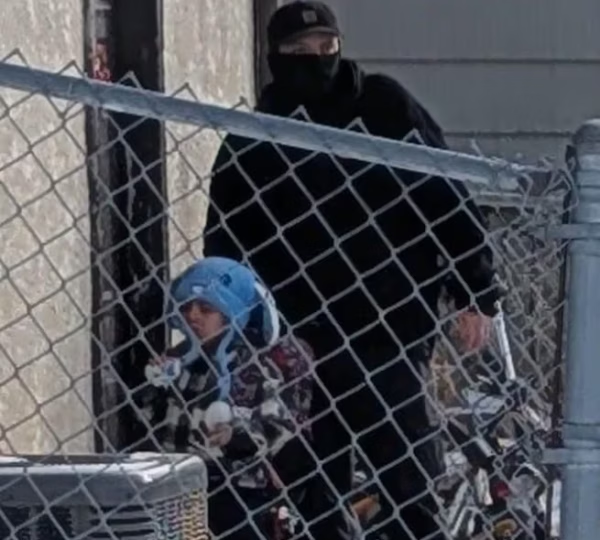
Stenvik — speaking alongside other district leaders — described a tense scene: agents removed the child from the family’s still‑running car and then, she said, directed the young boy to walk to the front door and knock, as a way to check whether anyone else was home.
Stenvik characterized this instruction as “essentially using a five‑year‑old as bait.” She said that nearby adults — including another adult family member and the school board chair, who happened to be nearby — offered to take custody of the child but were refused by ICE officers.
In the aftermath of the arrest, Liam’s older brother arrived at the home only to find both his father and little brother gone.
Liam’s mother, who was inside the home at the time, was left unaware of their whereabouts for more than 24 hours, according to first‑hand accounts reported by school officials and local media.
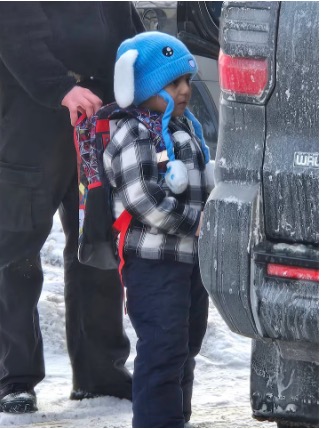
Liam and his father were flown to a family detention facility in Dilley, Texas, where many adults and children held by ICE are currently being housed.
According to multiple reports, the center in Dilley has faced criticism over conditions, including inadequate healthcare, illness among children, and length of detention.
Federal Response: DHS and ICE Defend the Operation
In response to widespread outrage following the news, the Department of Homeland Security — which oversees ICE — issued a statement on January 21 defending the action and refuting characterizations that agents targeted a child.
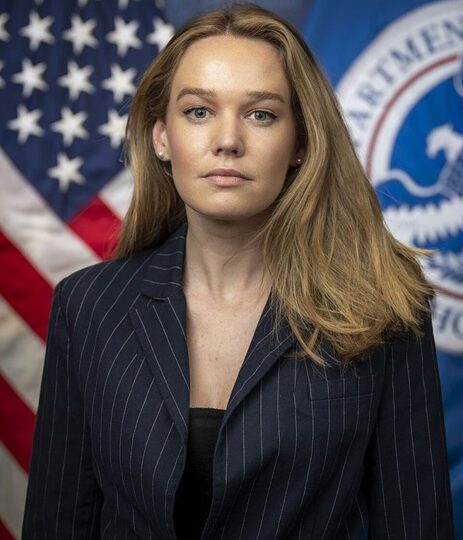
A DHS spokesperson, Tricia McLaughlin, said that agents were focused on arresting the father, whom the department described as an “illegal alien.”
She said that when officers approached, the father ran, “abandoning his child,” and that one ICE officer remained with the boy purportedly “for his safety” while other agents completed the father’s arrest.
DHS further stated that parents or guardians are typically given options in such cases, including the ability to choose removal with their children or arrange for a responsible adult to care for children, but that in this specific case, the father requested that his son remain with him in custody.
McLaughlin’s statement emphasized that ICE policies did not call for targeting the child.
However, local officials who were present at the scene directly contested parts of the federal account, noting that they personally witnessed agents refuse offers from neighbors and school personnel to take responsibility for the young boy.
Other Students Taken in Recent Weeks
School district leaders say that Liam’s case was not an isolated incident. Over the two weeks prior to January 20, officials reported that at least three other Columbia Heights students were taken into custody by ICE:
January 6: A 10‑year‑old fourth‑grader was detained alongside her mother while walking to school.
January 14: A 17‑year‑old high school student was detained with her mother in their apartment.
January 20 (morning): Another 17‑year‑old high school student was reportedly removed from a vehicle by ICE agents while on the way to school, without parents present.
Superintendent Stenvik said the frequency of these encounters has led to deep fear and uncertainty among families with school‑aged children, pointing to reports of ICE vehicles following school buses, agents circling neighborhoods, and families keeping children home out of concern for their safety.
Attendance at Columbia Heights schools has dropped significantly in recent weeks amid the heightened anxiety.
Legal Status and Community Impact
According to Liam’s attorney, Marc Prokosch, the family entered the United States legally and has an active asylum case pending — meaning they have complied with immigration procedures and do not have a final order of removal at this time.
Prokosch has publicly stated that they “did not come here illegally” and that the family is “not criminals,” underscoring that their process was lawful.
Educators and community leaders are now grappling with the broader psychological and social impact of these detentions. Stenvik and others have described students absorbing fear and trauma — not just those directly involved — as news of classmates being taken into custody spreads through the district.
Teachers have reported emotional distress among students, and school officials have sought to provide counseling and reassurance amid a climate of uncertainty.
One of Liam’s teachers described him as a “bright young student…so kind and loving,” emphasizing that he is well liked by classmates and that his absence has been deeply felt.
Similar sentiments have been shared by parents and community members who fear the long‑term effects on children’s sense of security and belonging.
Political and Public Reaction
The detentions have drawn condemnation from community leaders, lawmakers, and civil rights advocates.
Minnesota legislators representing the district, including Representative Erin Koegel (DFL) and others, issued statements calling the actions “out of line with the values, civil rights, and freedoms enshrined in the United States Constitution.” They urged greater protections for immigrant families and transparency from federal authorities.
Local advocacy groups and immigrant rights organizations have framed the detentions as part of a broader, aggressive surge of enforcement in the Minneapolis–St. Paul area.
Reports suggest that hundreds if not thousands of arrests have taken place statewide amid stepped‑up operations by DHS and partner agencies, including U.S. Customs and Border Protection. [Note: specific official numbers vary by source and are subject to confirmation.]
Opposition voices argue that actions targeting children — even in the context of family detentions — erode trust between immigrant communities and public institutions, with some calling for immediate policy revisions.
Supporters of stricter enforcement, conversely, maintain that immigration laws must be upheld comprehensively and that federal agents are obliged to pursue removal actions deemed lawful.
Broader Context: National Debate on Immigration Enforcement
The case in Columbia Heights comes at a moment of intense national debate over immigration policy and enforcement practices in the United States.
Federal immigration agencies are operating under directives that have expanded enforcement activities, particularly in interior regions far from the southern border.
These policies have increased encounters between immigration authorities and everyday community settings, including neighborhoods, workplaces, and schools across various states.
Critics of current enforcement strategies argue that the expansion of raids and detentions in residential areas — especially when involving families with children — carries significant humanitarian costs.
Advocates have stressed the need for rigorous oversight, clearer standards for interaction with minors, and policy reforms that balance adherence to immigration law with the protection of children’s welfare.
What Happens Next
As of late January 2026, advocates and legal representatives are working to locate and support families affected by the detentions.
Efforts include legal representation for asylum seekers, outreach to consular officials from countries of origin, and coordinated responses from local government and nonprofit support networks.
Meanwhile, calls for federal accountability continue. Community members, school officials, and policymakers have pledged to continue pushing for clarity on ICE’s procedures and assurances that future enforcement actions will not traumatize vulnerable populations, especially children.
The controversy surrounding these events has ignited a broader conversation about the balance between immigration law enforcement and family and community stability — a debate that shows no signs of abating as multiple stakeholders weigh in on both policy and human impact.