A haunting twist in the ICE killing adds new complexity to an already explosive case.
The fatal shooting of Renee Nicole Good by a federal immigration agent on a snowy Minneapolis street has ignited protests across the country and sparked fierce debate about immigration enforcement, police accountability, and the limits of federal power.
But as details continue to emerge about the January 7 incident, a startling revelation is reshaping the conversation, and may ultimately determine whether justice can be served.

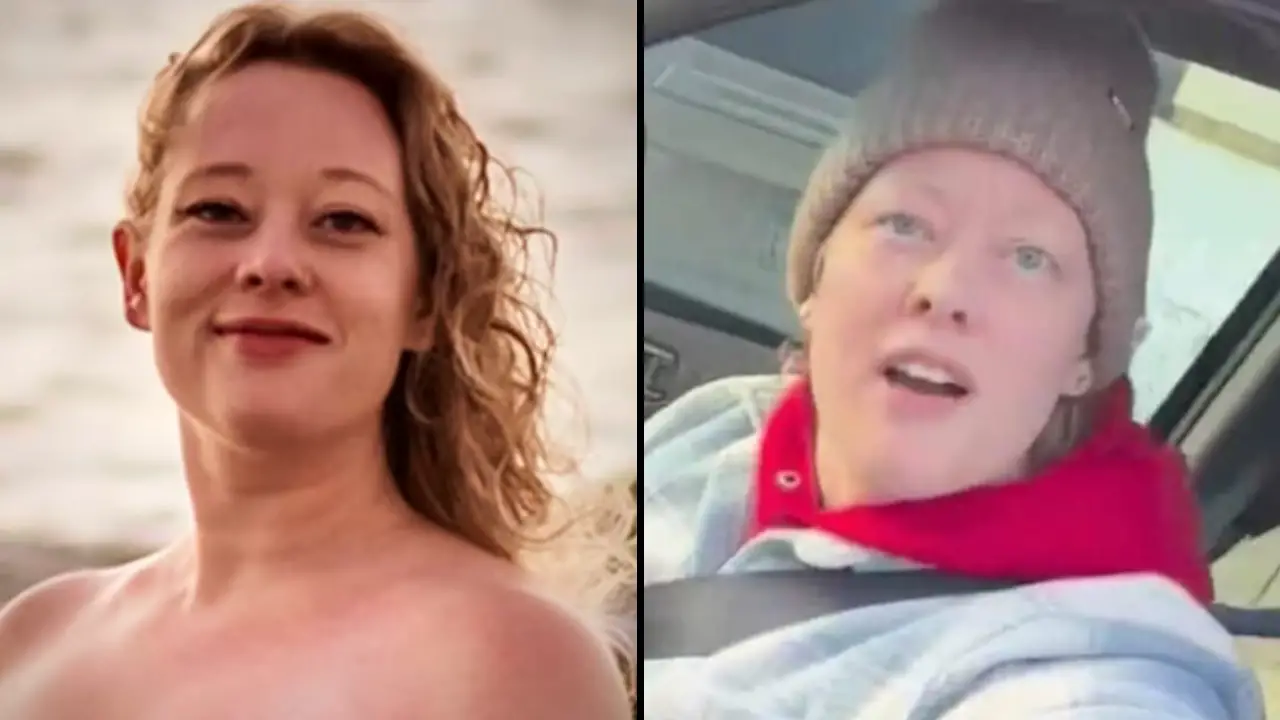
Thirty-seven-year-old Renee Nicole Good was behind the wheel of her SUV when an Immigration and Customs Enforcement (ICE) officer opened fire, killing her as she attempted to drive away from the scene.
The shooting occurred during an immigration enforcement operation in a Minneapolis neighborhood, part of the Trump administration’s aggressive deportation campaign.
Video footage from multiple angles shows Good turning her vehicle’s wheel as the agent stood near the front left side of her car.
Three shots rang out, one as the agent pointed his weapon at the windshield, and two more as he aimed at the side window while the vehicle drove away. Good was struck and killed.
Her wife had been filming the confrontation just seconds before the shooting.
Federal officials, including President Donald Trump, Vice President JD Vance, and Homeland Security Secretary Kristi Noem, quickly characterized the shooting as justified self-defense.
They claimed Good ‘viciously ran over’ the officer and portrayed her as a ‘rioter’ who weaponized her vehicle against law enforcement, per CNN.
Minneapolis Mayor Jacob Frey saw things differently.
“They are already trying to spin this as an action of self-defense,” he said per USA Today. “Having seen the video myself, I want to tell everybody directly, that is bull****.”

Now, court records have revealed a critical detail about the unnamed ICE agent: just six months earlier, he was dragged by a vehicle during another enforcement operation, per The Guardian.
According to federal court documents, agent Jonathan Ross was severely injured in June 2025 while attempting to detain a Guatemalan migrant named Roberto Carlos Muñoz.
When Ross reached into Muñoz’s vehicle to unlock the door, the driver accelerated, catching Ross’s right arm and dragging him along the street.
Ross fired his Taser at Muñoz, striking him in the head, face, and shoulder, but was dragged for approximately 12 seconds before breaking free.
He suffered a ‘substantial wound’ requiring more than 50 stitches on his arm, along with abrasions to his knee, elbow, and face.
The incident ended with Muñoz’s conviction for assault on a federal officer with a dangerous or deadly weapon. He remains in jail awaiting sentencing.
Multiple news outlets, citing unnamed sources, have confirmed that the agent involved in June’s dragging incident is the same one who shot and killed Good.
Ross has worked with ICE in Minnesota since 2017 and is a member of a specialized response team that handles high-risk warrants and deportations.

In the aftermath of Good’s death, Vice President Vance made a stunning claim that drew immediate pushback from legal experts.
Speaking at the White House, Vance asserted that the ICE agent who killed Good is ‘protected by absolute immunity’ from state prosecution, Global News reports.
“The precedent here is very simple,” Vance declared. “You have a federal law enforcement official engaging in federal law enforcement action, that’s a federal issue. That guy is protected by absolute immunity.”
Constitutional law experts quickly disputed this characterization.
“The idea that a federal agent has absolute immunity for crimes they commit on the job is absolutely ridiculous,” said Michael J.Z. Mannheimer, a constitutional law expert at Northern Kentucky University.
The reality, experts say, is far more nuanced. While federal officials can be charged by state prosecutors for conduct taken in the course of their duties, they can attempt to move such cases to federal court and raise immunity defenses.
A federal judge would then conduct a two-part analysis: first, whether the agent was acting within their official duties (a relatively low bar), and second, whether their actions were reasonable under the circumstances (a much more complex determination).
Minnesota Attorney General Keith Ellison, who successfully prosecuted Derek Chauvin for the murder of George Floyd, and Hennepin County prosecutor Mary Moriarty have both said they are collecting evidence and haven’t yet made a charging decision. However, they face significant obstacles.
The FBI withdrew from a joint investigation with state authorities, limiting Minnesota’s access to crucial evidence.

Here’s where the story takes its most troubling turn: despite the protests, the video evidence, and the calls for accountability, experts across the political spectrum agree on one thing – the ICE agent is highly unlikely to face criminal charges.
The reasons are both legal and political. Trump administration officials have already made clear there’s ‘zero chance’ of federal prosecution, according to former federal prosecutor Neama Rahmani.
When the President, Vice President, and Homeland Security Secretary all declare the shooting justified, the Department of Justice isn’t going to pursue charges.
As for state charges, Minnesota prosecutors would face an uphill battle.
They would likely have to prosecute in federal court on unfamiliar turf, prove the agent wasn’t reasonably carrying out lawful duties, and overcome unclear precedents on federal officer immunity, all without full access to the evidence.
Even if charges were somehow brought, the agent’s June dragging incident would likely play a central role in his defense.
Defense attorneys would argue that having nearly lost his life just months earlier when a driver accelerated with his arm caught in a vehicle, Ross had every reason to perceive Good’s forward movement as a deadly threat—even if video analysis suggests otherwise.
“It’s going to be a very, very tough job for prosecutors,” said criminal defense attorney Mark Bederow, noting that the agent would argue he didn’t have the luxury of analyzing the SUV’s movements in ‘frame-by-frame, slow motion video.’