
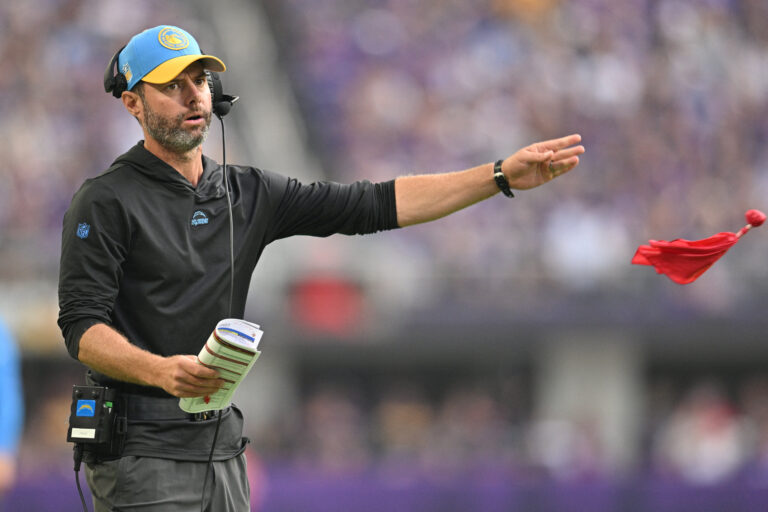
The NFL quietly tweaked its rules right before the new season, breaking a long-standing tradition. For the first time since the league introduced its current instant replay system in 1999, head coaches no longer need to personally throw the challenge flag.
Under the new rule, a head coach can designate someone before the game, like an assistant coach, to throw the flag and officially challenge a play.
The update was added directly to Rule 15, Section 1 of the NFL rulebook without needing a full vote from the competition committee. The new language states, “The head coach or head coach’s pregame challenge designee can initiate a challenge by throwing a red flag onto the field of play before the next legal snap or kick.”
It’s a subtle shift, but it ends a 25-plus-year tradition where the head coach was the only person on the sideline allowed to toss the flag.
Coaches Gain More Flexibility On Challenges
The new rule gives coaches another task they can hand off to assistants. If a coach wants someone else to handle challenge duties, he must notify the officiating crew before kickoff.
The decision itself will likely stay the same. Most coaching staffs already rely on assistants and replay personnel in the booth to review plays and recommend challenges. The head coach typically makes the final call. Now, an assistant can also handle the physical act of throwing the flag.
The update may remind fans of former New England Patriots coach Bill Belichick. Belichick famously kept his red challenge flag in his sock. On several occasions, he had to pull up his pant leg before throwing it onto the field.
Teams still receive two challenges per game. If officials overturn one of those challenges, the team earns a third challenge.
Replay review rules remain unchanged. Coaches can challenge issues such as possession, whether a player stayed in bounds, whether a player gained a first down, or whether the ball touched the ground. Officials automatically review scoring plays, turnovers, failed fourth-down attempts, possession after kicks, and player disqualifications. Teams cannot challenge those situations.
While the adjustment may seem minor, it gives coaching staffs more flexibility and changes a rule that had remained untouched for more than two decades.