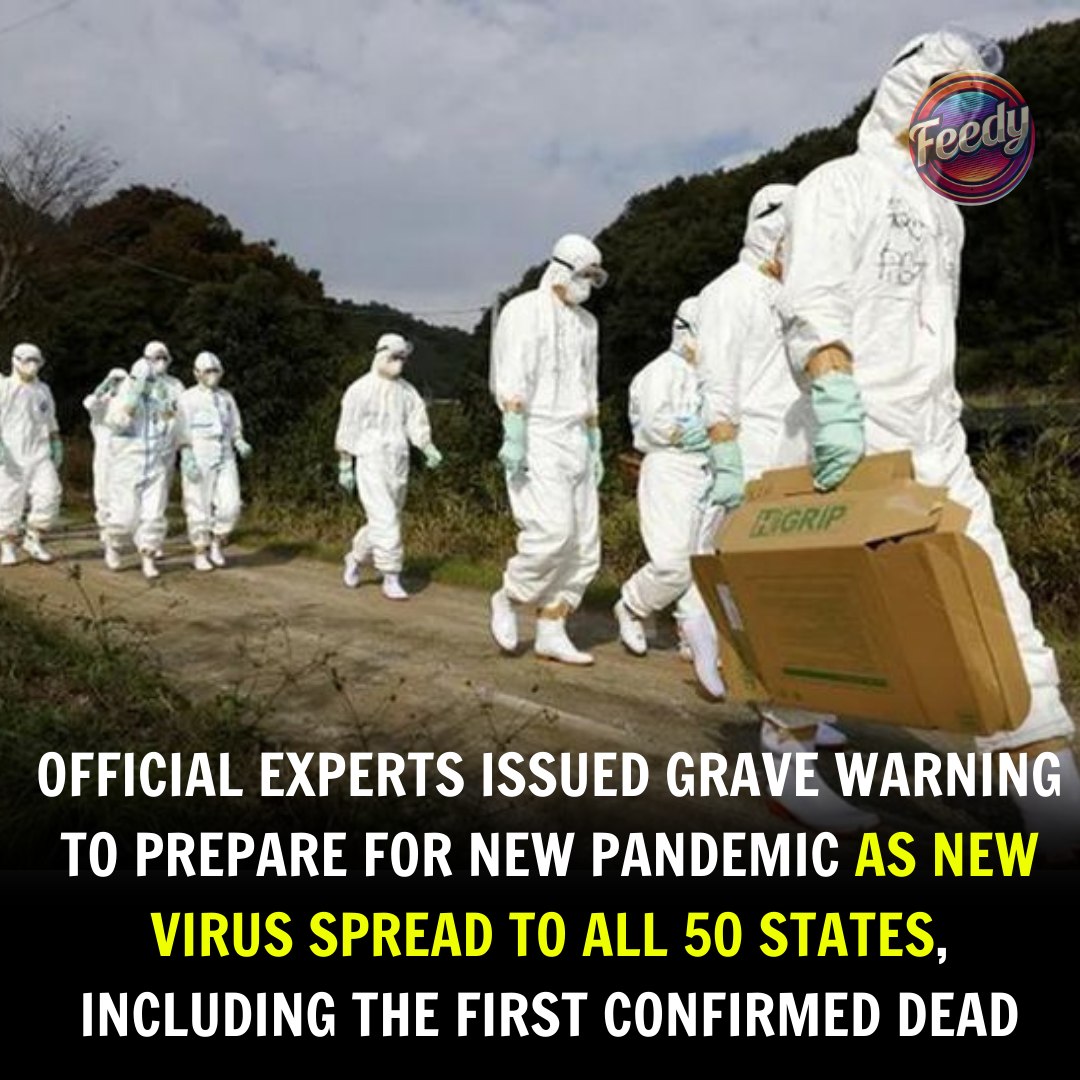
As bird flu spreads rapidly across U.S. farms, health experts are raising the alarm: America could be on the brink of another public health crisis.
A dangerous strain of avian influenza — H5N1 — has now affected over 1,000 dairy herds and infected more than 70 people, including the first confirmed U.S. death earlier this year. Scientists say the virus is evolving and gaining ground, and the country must act fast to avoid a potential epidemic.
🦠 A Virus on the Move — and Getting Stronger
Since 2022, H5N1 has led to the death or culling of more than 168 million poultry, contributing to nationwide egg price spikes and growing food security concerns.
But the real threat, experts warn, lies in the virus’s ability to mutate and spread.
When two different viruses infect the same host, they can exchange genetic material, creating new versions that may be more dangerous. While human-to-human transmission hasn’t been confirmed, scientists say the virus is getting dangerously close.
🔬 Top Virologists Sound the Alarm
The Global Virus Network (GVN) is now calling for immediate, coordinated action. Their key concerns include:
-
Weak surveillance systems in agricultural zones
-
Insufficient protective equipment for farm workers
-
The risk of mutation and reassortment in cows and other mammals
-
A clear lack of preparedness at the federal level
“We need to strengthen surveillance and educate the public about the risks of handling infected animals,” says Dr. Peter Palese, director at GVN and a global leader in influenza research.
Dr. Ab Osterhaus, another leading virologist, echoed the urgency:
“The growing spread of H5N1 among mammals is concerning. We must understand and interrupt transmission in cattle—through herd management and possibly vaccination.”
🧪 Vaccine Uncertainty & Policy Gaps
While the U.S. does have a stockpile of 20 million bird flu vaccine doses, recent reports suggest that Moderna’s $590M contract to produce an H5N1 vaccine could be revoked.
Meanwhile, the Office of Pandemic Preparedness and Response (OPPR) — created after COVID-19 — has reportedly been underfunded and understaffed under the current administration.
Even more concerning, testing of cattle and farmworkers was voluntary until late 2024.
As of now, only cattle crossing state lines are subject to mandatory testing, leaving significant gaps in containment efforts.
🧍♂️ Human Cases Are Rising — But So Is Confusion
Since March 2024, over 70 human cases have been confirmed across 14 states — the highest number in at least two decades. Most were mild, involving farmworkers in close contact with infected poultry or dairy cows.
But some cases remain mysterious — like a toddler in California and an adult in Missouri who had no known exposure. And tragically, the first U.S. death occurred in January in Louisiana, where an elderly man died after coming into contact with sick birds from a backyard flock.
Genetic sequencing of the virus from that case revealed mutations inside the patient’s body, raising concerns that the virus is learning how to become more deadly in humans.
🐖 Pigs, Wildlife, and Raw Milk — New Frontiers of Spread
What’s especially worrying is that H5N1 has also been found in pigs — animals that can harbor flu viruses from both birds and humans. These “mixing vessels” could be ground zero for a new, hybrid strain.
The virus has also appeared in more than 400 wild animals, including raccoons, skunks, foxes, and seals, likely infected by eating contaminated bird carcasses.
To add to the risk, the virus has been detected in raw, unpasteurized milk. The USDA now requires raw milk producers to submit samples upon request, as contaminated dairy may pose yet another route of transmission.
📊 Nationwide Spread: Surveillance Is Falling Short
As of now, the virus has spread to:
-
1,031 dairy herds in 17 states
-
Over 12,875 poultry and wild flocks
-
Detected in wastewater samples in at least 60 sites, with 80% positivity rates in Iowa and California
This widespread circulation has led public health experts and World Health Organization officials to criticize the U.S. response, describing it as an outbreak “unfolding in slow motion.”
💉 Is There Any Good News?
Yes — but it requires swift action:
-
The U.S. has enough vaccines to cover 20 million people, with the ability to scale to 100 million more if needed.
-
Antivirals like oseltamivir (Tamiflu) are effective and already in use.
-
Experimental vaccines for poultry are under development.
-
Human antivirals have shown promise in treating infected cows, offering a potential tool to contain livestock spread.
🔚 Bottom Line: Prepare Now — Or Risk a Repeat of 2020
While H5N1 has not yet evolved into a pandemic, the signs are deeply troubling.
Its rapid spread, mutation capability, and growing presence across species make it one of the most dangerous viral threats of our time.
“This virus might not go pandemic,” says Dr. Marc Johnson, a virologist at the University of Missouri, “but it is really trying hard — and it’s getting a lot of opportunities.”
The time to act is now — with stronger surveillance, public education, herd protection, and vaccine readiness.
Because if we wait until it’s already here, it will be too late.
5 years old saves sister, dog from burning home then alerts rest of family
A five-year-old boy is being hailed a hero after he woke up to flames next to his bed Sunday morning and made sure his family of nine escaped.
“I picked Lily up, got to the window with Lily, got the dog and got out,” Noah Woods, 5, told WSBTV. “That’s it.”

But he did so much more.
Sunday morning an electrical fire broke out in the room that Noah shared with his two-year-old sister Lily. After realizing the danger, he grabbed his sister and the family dog and ran to the window.
According to a GoFundMe set up to help the family with expenses, Noah, Lily, and their dog escaped through the window. Once they were safe, Noah went next back to wake his uncle so they could continue helping everyone else escape.
“Our hero!” the Bartow County Fire Department posted on Tuesday.
“5 year old Noah Woods recently woke up to find his bedroom on fire. The only available exit was a window. He got himself and his 2 year old sister out of the window to escape the fire and re entered the house to alert the rest of the family
Thankfully, all nine members of the family got out of the home and with the exception of a small burn on Noah’s wrist, no one was hurt.
“Noah and 4 other family members were treated for minor burns and smoke inhalation … On Friday BCFD Chief Dwayne Jamison will recognize him as an Honorary Bartow County Firefighter and present him with a Lifesaving Award.”
“If it wasn’t for Noah, I mean, we were all asleep, so we wouldn’t have known what was going on,” David Woods, Noah’s grandfather, said. “We could’ve all lost our lives.”
Now the family must rebuild – their home was a complete loss – but at least they’ll be doing it with all members of their family by their side.
“If it wasn’t for Noah, we may not be here today,” David wrote.
Noah, you are a hero. You saved your family’s life. I have no doubt that your community will help you rebuild. Please consider sharing this amazing story on Facebook to honor this clever 5-year-old and his great instinct!